
Erzulie Freda
The women Goddesses
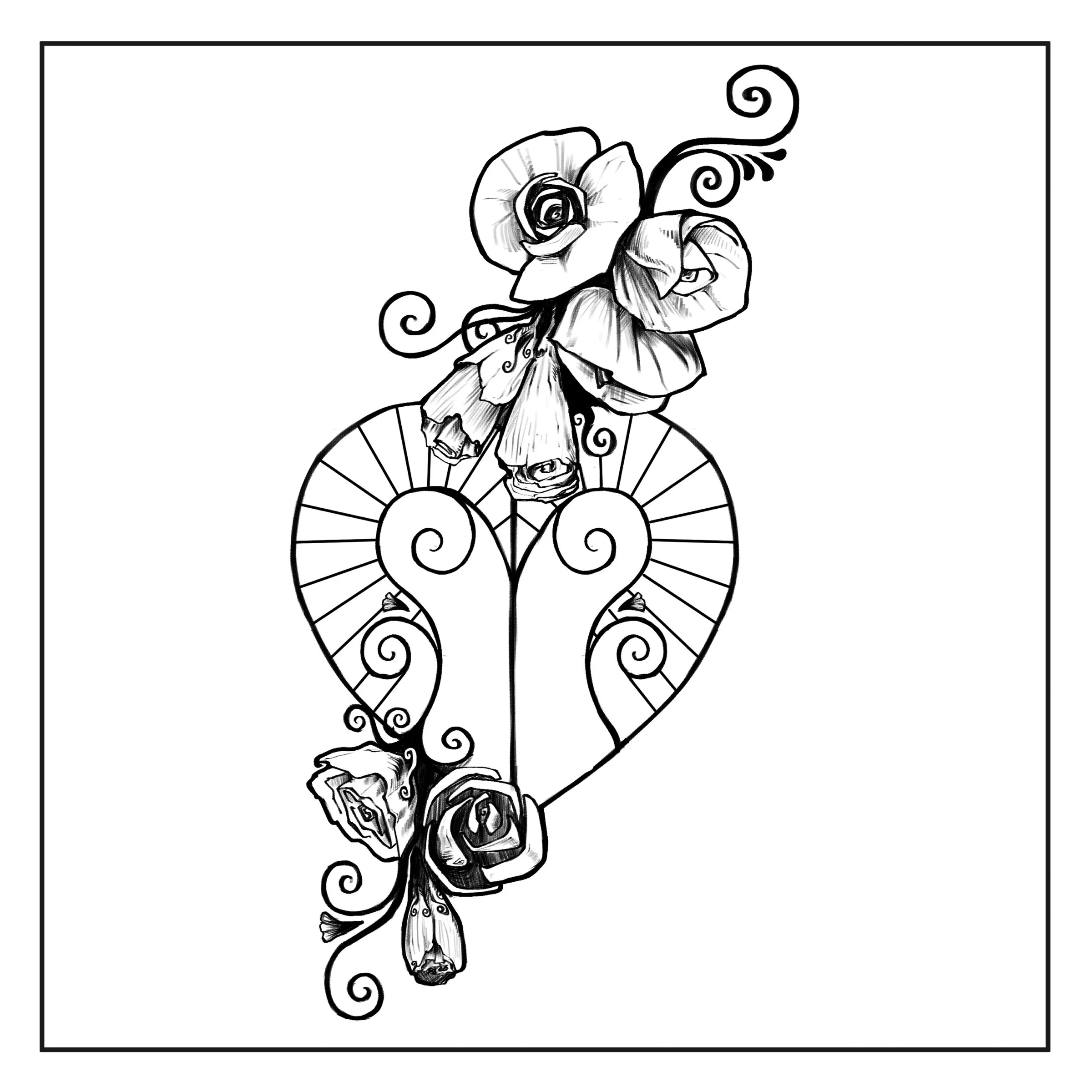
Freda’s Heart
Where Ogou embodies fire, iron, law, and rebellion, Erzulie unfolds as his apparent opposite: water, desire, beauty, longing, and dream. Yet in Haitian Vodou, these forces are not in contradiction but in dynamic balance. The female principles in Haitian Vodou participate in all of the major cosmic forces (with the exception of the distinctly masculine forces personified in Ogou), and Vodou does not idealize women solely as the principle of creation. Neither does it give preferential emphasis to the maternal womb over the phallic principle, either as cosmic origin or in the prevailing psychology reflected in ritual. Because creation is understood as the equal responsibility of male and female, the female principle enjoys less singular and specific importance here than in several other major mythologies. But if Vodou denies woman this distinctive role as a separate cosmic element, it proposes an alternative one that she might well find even preferable; Vodou has given women, in the figure of Erzulie, exclusive title to that which distinguishes humans from all other forms: their capacity to conceive beyond reality, to desire beyond adequacy, to create beyond need.
In Erzulie, Vodou salutes women as the divinity of the Dream, the Goddess of Love, the muse of Beauty. It denies her emphasis as mother of life and of men in order to regard her as the mother of man’s myth of life—its meaning. In a sense, she is that very principle by which humans conceive and create divinity. Where Ogou breaks chains and forges history, Erzulie gives it longing, beauty, and emotional depth.
The Erzulie are a family of lwa often associated with water (fluidity), femininity, and feminine bodies. They are one of the only groups of spirits directly tied to these characteristics, and those who become mounted (chwal) are often women or masisi (effeminate and/or homosexual men). Through them, Vodou affirms emotional complexity, erotic power, vulnerability, and desire as sacred forces rather than weaknesses.
Some of the most well-known aspects of Erzulie:
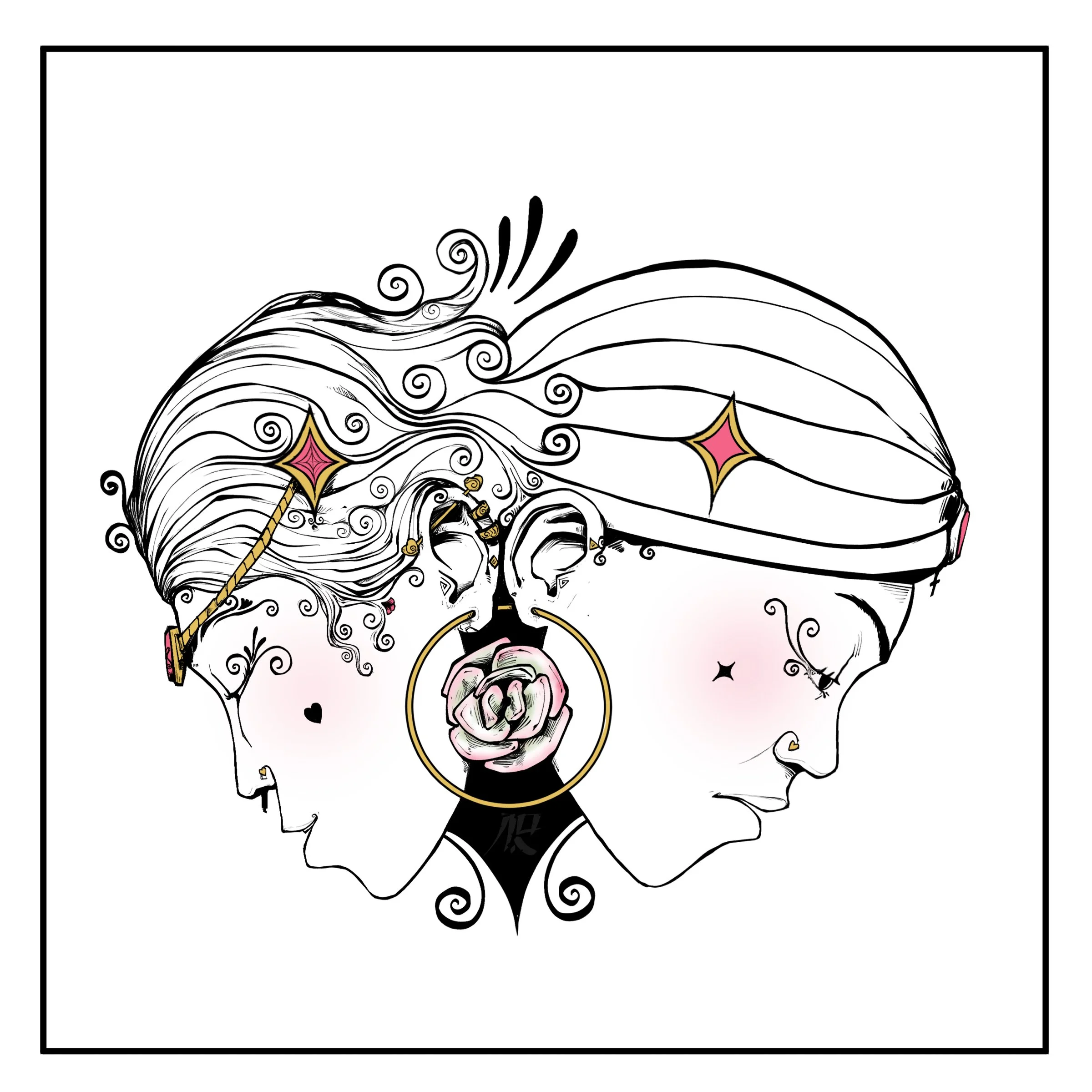
Freda and Danto
Erzulie Freda (Lady Erzulie) – the vain and flirty goddess of love.
Erzulie Mansur (Erzulie the Blessed) – represents maternal love and protects children from harm.
Grann Erzulie (Grandma Erzulie) – represents the wisdom granted by experience and maturity, and grandmotherly kindness and love.
Erzulie Dantor (Erzulie of the Wrongs) – protects women and children and exacts revenge against those who wrong them.
Erzulie Balyann (Erzulie the Gagged) – “silences” (heals or calms) hearts, keeps secrets, or ensures that secrets will not be revealed; helps people forget past loves and overcome passionate emotions.
Erzulie Mapyang (Erzulie the Suckler) – deals with the pain of childbirth and protects unborn and newborn babies.
Erzulie Yeux Rouge or Erzulie Ge-Rouge (Red-Eyed Erzulie) – takes revenge on unfaithful lovers.
Erzulie Towo – aids the jealous or those slighted in love.
Others:
Erzulie La Flambeau (Erzulie of the Torch)
Erzulie Wangol (Erzulie of the Sacred Banner)
Erzulie Shango Pye Nago – a loa that is a feminine aspect of Shango.
Today, I develop more fully the figure of Metress Ezili Freda Tocan Dahomey, whose luminous softness and tragic longing form one of the emotional hearts of Vodou cosmology.
Erzulie Freda
That day, the goddess wore a pink dress dotted with hearts embroidered in gold thread. Her delicate chest rose with voluptuous breathing. Her left fingers were fitted with three rings. A sweet scent, a mixture of basil and Florida water, perfumed the air. She looked at herself in a mirror held in her left hand, and in her right hand a heart-shaped fan, her veve.
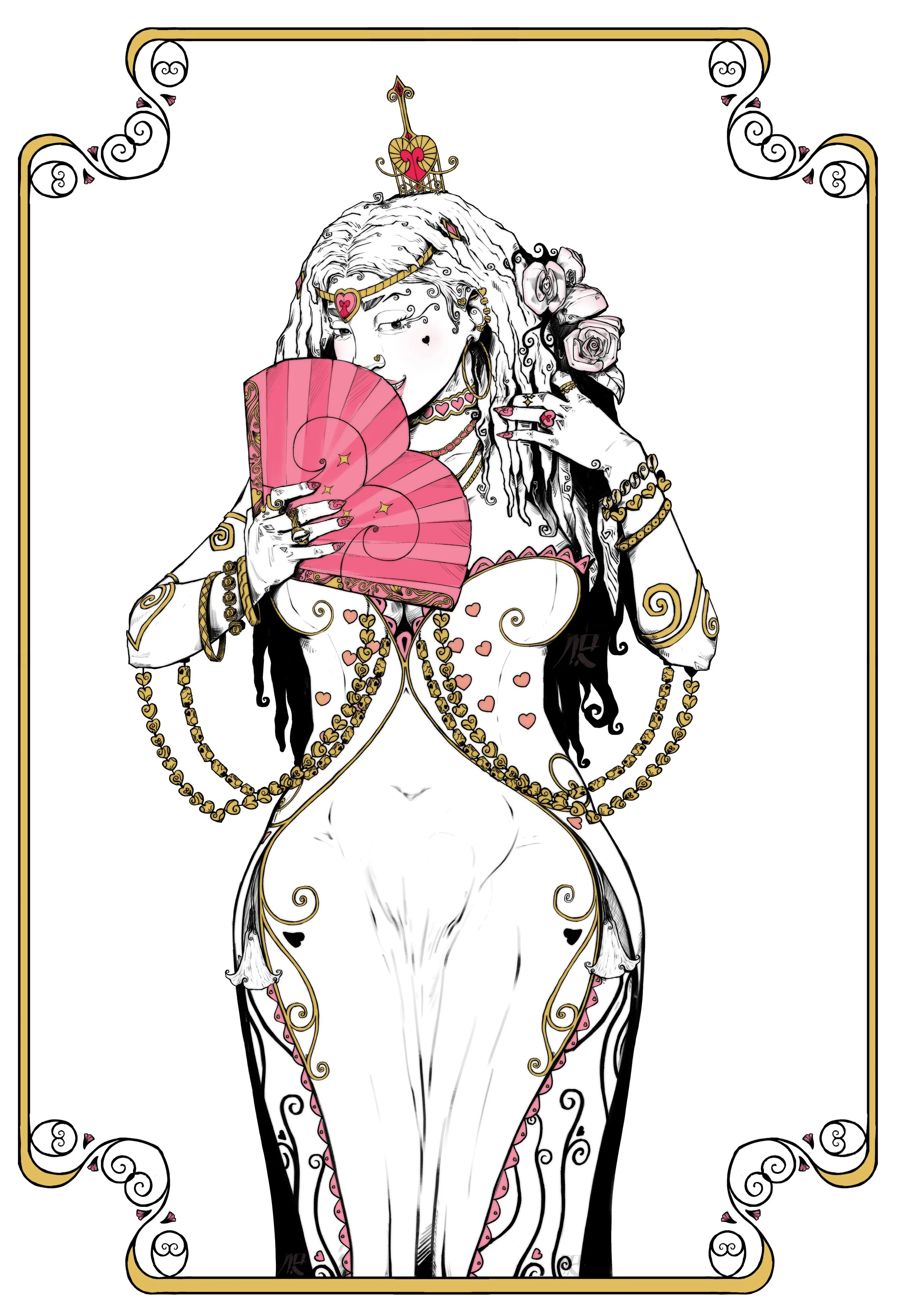
Metres Freda
The tempo of movement becomes more leisurely, tension dissolves, and the voices soften, losing whatever aggressive or strident tones they may have had. One has the impression that a fresh, cooling breeze has sprung up somewhere, and the heat has become less intense, less oppressive.
A la yon bel fanm
Se Erzili! (bis),
Erzili ô, map' fè yon kado
Avan ou ale!
Erzili ô, Erzili à l
Kay ou mandé wouzé!
Si nan pwen losyon,
M'a rousé avèk dloWhat a beautiful woman
It’s Erzili ( bis)
Erzili o I’lll gift you something
Before you go
Erzili o, Erzili a!
Your house needs sprinkling
If there’s no perfume
Sprinkle it with water
Support the work that keeps these stories alive.
Prints, stickers and collectibles inspired by Haitian Vodou —
each one helps me keep writing, researching, and illustrating these spirits.
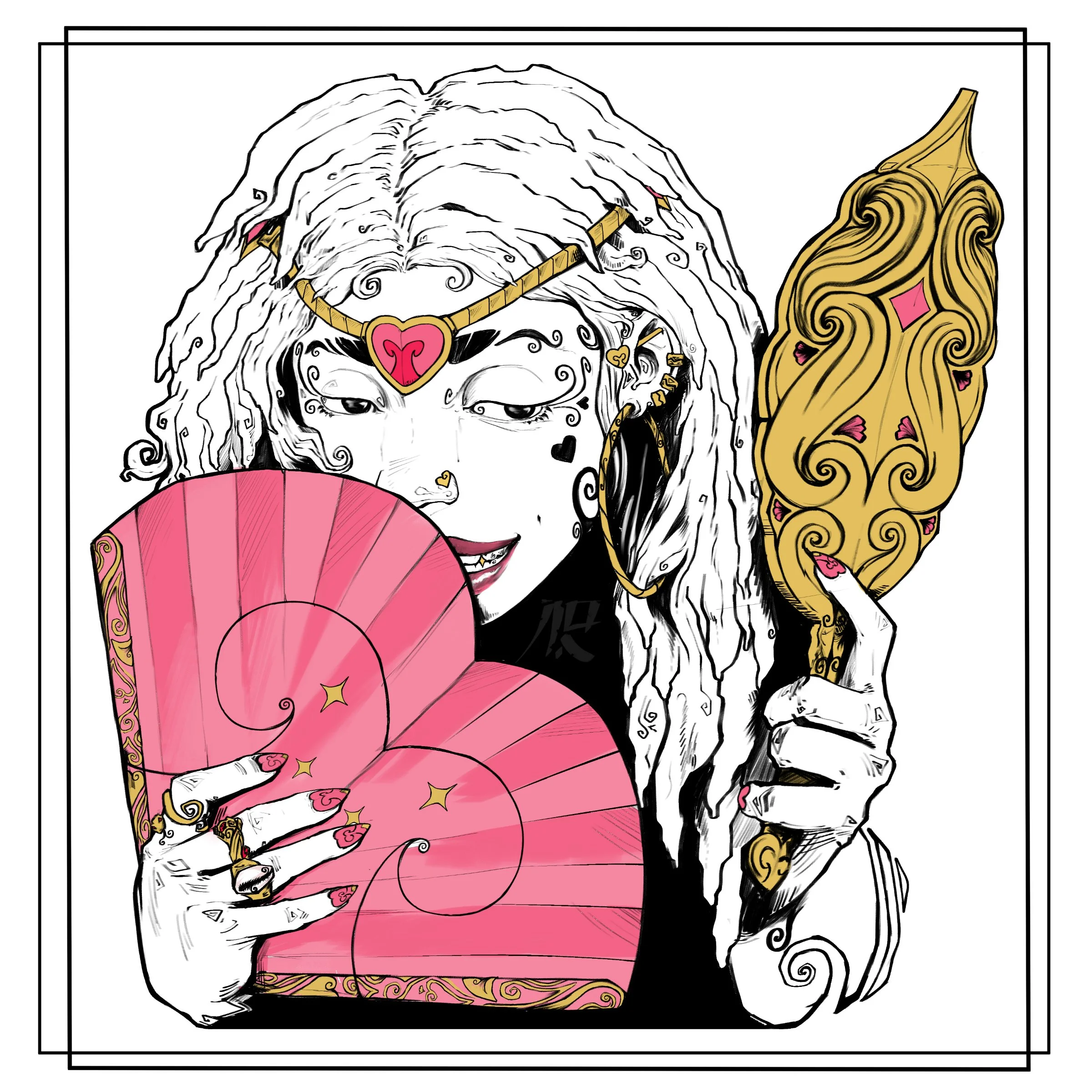
Metres Freda
Erzulie Fréda Dahomey is the guardian of fresh waters, the Haitian Vodou spirit, jewelry, dancing, luxury, flowers; she's also the divinity of beauty and love and, in this capacity, the protector of humanity. She is often invoked under the name Freda-Tocan-Dahomin, the Rada aspect of Erzulie, the cool one of the family, in contrast to Dantor, the Petro and more fiery aspect. She wears three wedding rings, one for each husband—Damballa, Agwe, and Ogou.
She is considered a generous spirit, showering her followers with material and spiritual gifts as well as love, but she can also be capricious, difficult, and even cruel. Freda is often invoked by men seeking sexual prowess or wealth. Her symbol is a heart, her colors are pink, blue, white and gold, and her favorite offerings include jewelry, perfume, sweet cakes, liqueurs, combs, mirrors, lipsticks, nail files, and white flowers — daturas ( fey kloch ) and begonias.
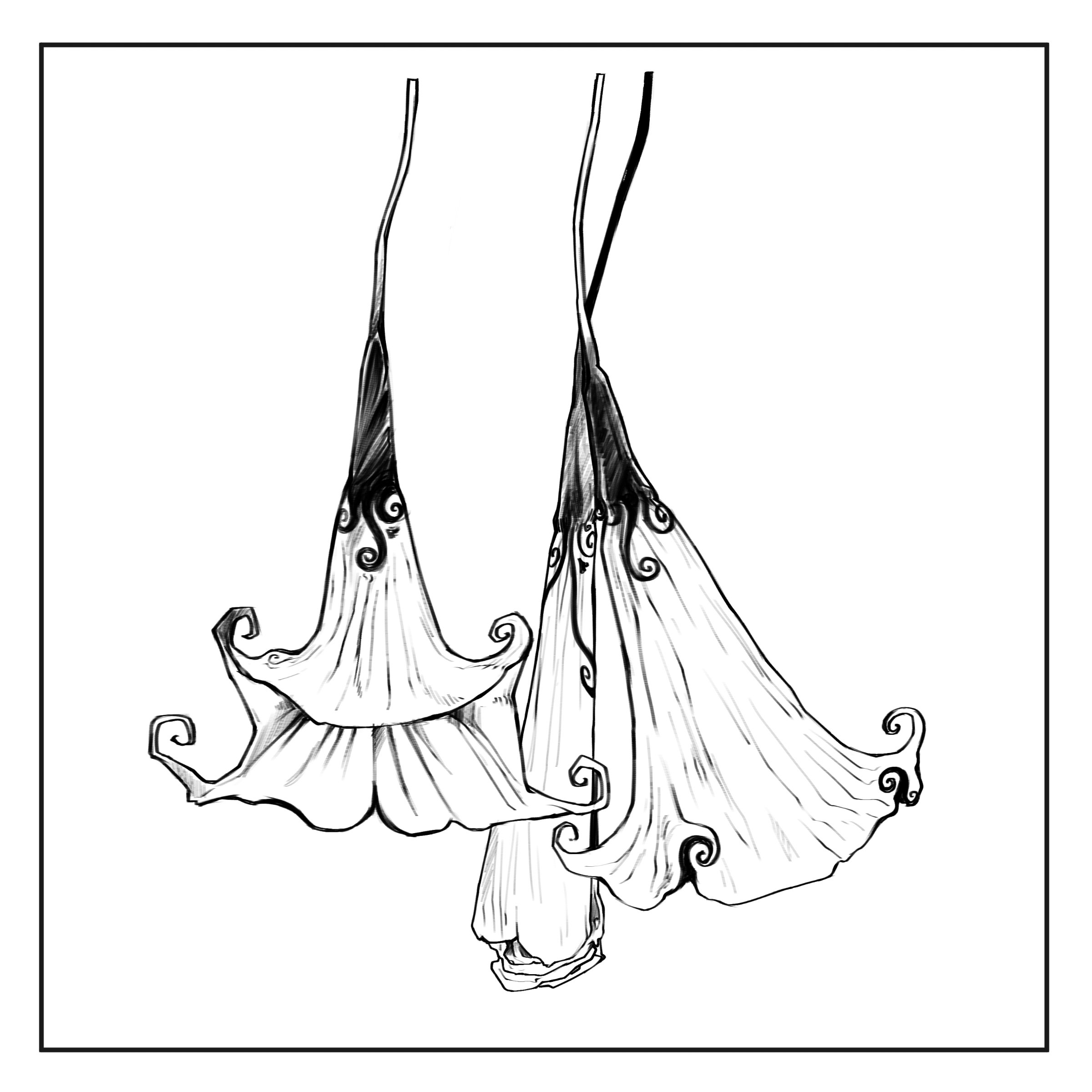
Datonas (fey kloch)
Coquettish and deeply fond of beauty and finery, Erzulie Freda embodies femininity and compassion, yet she also has a darker side: she is seen as jealous and spoiled and, within some Vodou circles, is considered lazy. During ritual possession, she may enter the body of either a man or a woman. She enjoys flirtation and seduces people without distinguishing between sexes. She is conceived of as never able to attain her heart’s most fervent desire, and for this reason she always leaves a service in tears.
She is said to have repented of her behavior after the death of her daughter. This is why peasants like to imagine her as Ezili san zo or Grann Ezili, crying over her child. Prostitutes often make her their patron, because, like her, they intend to repent of their sins.
Complicated Love Life of Freda and the Loss of Her Only Child
“I have no love, for I am love itself. And I am in love with love. I have no luck—there lies my despair.”
Mwen tande yon kanon ki tiré!
Mezanmi ô! M' mandé sa li ye!
Bâtiment a Agwe Taroyo dérapé!I heard a canonshot!
My friends! I asked what it was!
Agwe Taroyo’s boat moved!
Mistress Erzulie is the wife of Damballah Wèdo and, in this capacity, the co-wife of Aïda-Wèdo. She is said to have left Damballah and then taken up residence with Agwe. In fact, Erzulie has had many lovers in the Vodou pantheon. Her great passion was Ogou Badagri, god of war. Her daughter Ursule is said to be the fruit of that love, whose resemblance to her father is striking, according to Vodou practitioners.
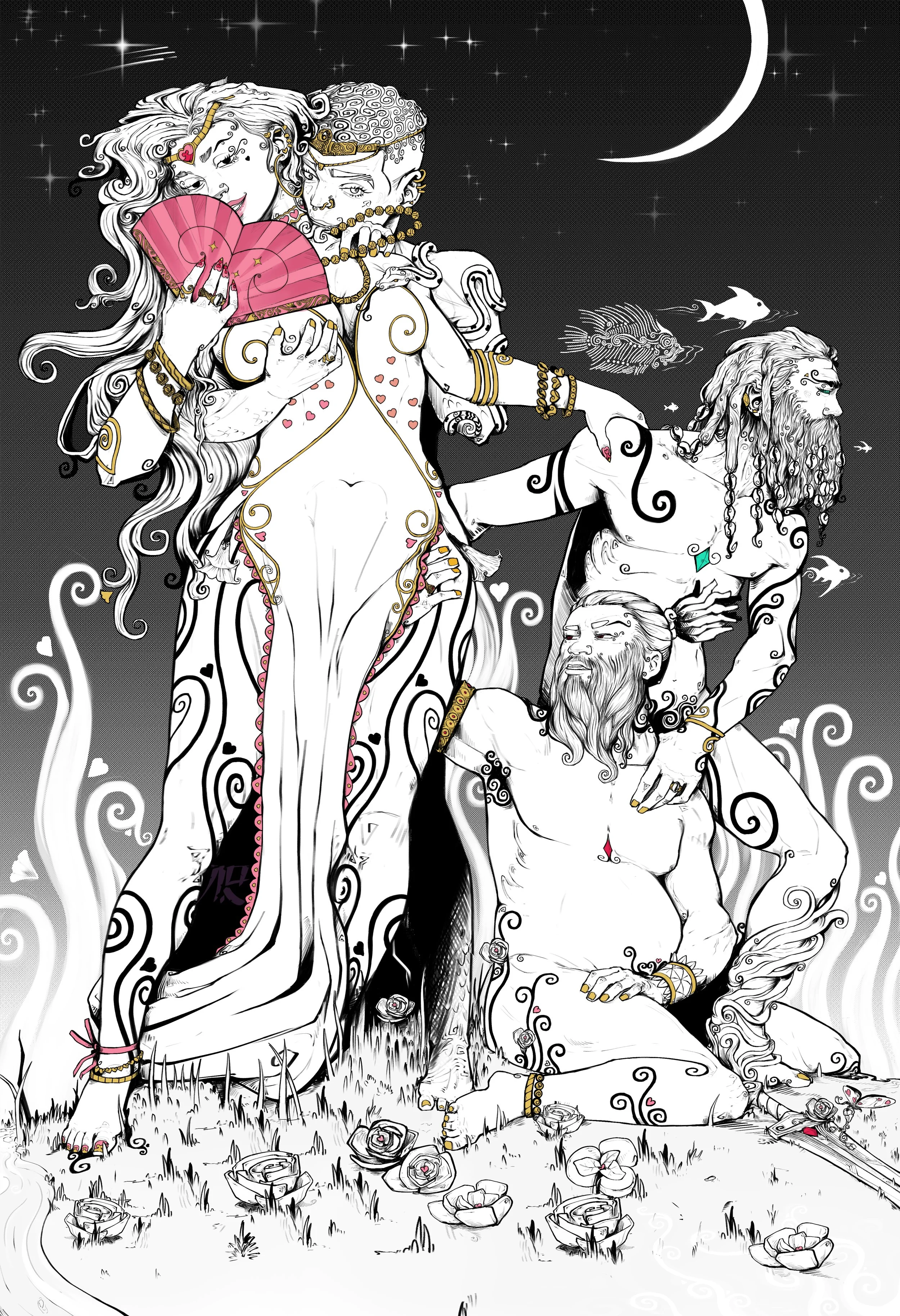
Metres Ezili Freda with her husbands
It is because of these three that she wears three wedding rings simultaneously. Yet it has never been suggested that she betrayed any of them, nor are the lwa exasperated by what might seem frivolous indecision. Ogou may battle with Agwe for her, but in a curious way, this struggle seems of purely masculine significance—a pattern the male ego must follow. One senses that each seeks not to exclude the other, but rather to retain her favor.
It is as if, from the limitless wealth of her heart, she could love many, and each in ample and full measure. Her generosity is so natural that one is caught up in her exuberant innocence, believing with her that all is good, simple, and fully realized.
Agwe is the lover “par excellence”: tender and gentle in bed, despite being angry and fierce at times. Erzulie, however, is unlucky. She had only one daughter, Ursule. Agwe believed the child was his, and she did not deny it. But one day, Ursule, returning from a visit to Agwe, perished in the waves. Agwe’s gift canoe sank with her. Master Balendjo, captain of the Immamou, Agwe’s boat, was only a few meters away when he saw a seabird rushing furiously toward her—and then, nothing more. Following the bird with his gaze, he saw it transform into a rainbow. Then he knew that Ayida Wèdo, wife of Damballah, had taken revenge on Freda, because she had nearly taken her husband from her, and that during an altercation between rivals, Freda had called her frigid.
Erzili-o! se pa Erzili sa? (bis)
Erzili marye, li pa genyen chans!
Erzili fè jenès, li pa genyen chans!
Yon sèl ti pitit li genyen,
L ale navigué nan lanmè.
Kanot chaviré avèk li.
Nan lanmè, kanot chaviré ak li!Erzili oh! isn't that right Erzili? (bis)
Erzili got married, she was unlucky.
Erzili became a prostitute, it went wrong for her.
Only one small child she had
She went sailing on the sea.
Her canoe sank with her.
In the sea, the canoe sank with her.
As soon as grief assails her, the memory of her daughter resurfaces. She grows sick, she ages, she becomes the boneless Grann Ezili.
Guédé Nibo is also said to court the beautiful goddess, but without success. Being completely black, he could not please Erzulie, who harbors color prejudices. Guédé Nibo often appears in ceremonies when Erzulie has manifested; he follows her, inhaling her perfume and muttering in a strongly nasal accent: “My friends, you cannot know how much I love this woman, but she does not want me because I am black.”
Erzulie and the Sacred Place
The pilgrimage of Saut-d’Eau is one of the most famous in Haiti and the most frequented. On July 16, the feast day of the Virgin, Catholic devotees and Vodou practitioners rush there in great numbers, using every possible means of transportation, to perform their devotions to the miraculous Virgin of Saut-d’Eau (Vyej Mirak Sodo).
“The magical waterfall, where the spirit of Erzulie resides, is a place people go to dance, to sing, and to ward off evil,” explains Erol Josué, director of the National Bureau of Ethnology, who is also a houngan, a Vodou priest.
“People truly speak with Erzulie because, for us, praying is not just kneeling and closing one’s eyes: it means speaking with a spirit who has become a friend, a woman with whom one can converse, to whom one can truly say, ‘this is what is happening in my life; I do not agree,’” he adds.
In this small town, located two hours by road from Port-au-Prince, rural families mingle with young bourgeois from the capital: this pilgrimage is a rare example of social mixing in Haitian society.
While homosexuality, openly opposed by certain members of parliament, remains a taboo in Haiti, the days of pilgrimage at Saut-d’Eau provide a refuge for members of the LGBT community (lesbians, gays, bisexuals, and transgender people).
“Saut-d’Eau truly stands as an example of respect for the right to be different: you will see transgender people and homosexuals openly living their lives in public,” praises Erol Josué. “It is the only place where people can truly feel authentic. No one has the right to bother them, to tell them they do not belong here, because all are children of the Virgin, children of Erzulie, the mother of independence who accepts everyone.”
Stay in the current. These stories don't end here.
Each post is part of a deeper series uncovering the lwa,
the spirits, and the sacred world of Haitian Vodou —
through writing and original illustration.
Join the newsletter and be the first to know when the next spirit arrives.
Yet Erzulie is not only silk, perfume, mirrors, and tears. Beneath Freda’s softness pulses another current—darker, fiercer, and far less forgiving. Where Freda longs, Dantor burns. Where Freda dreams, Dantor defends. If Freda embodies love’s vulnerability, Erzulie Dantor manifests its rage, its boundaries, and its unyielding demand for justice. In the next post, we turn toward this other face of Erzulie: the scarred mother, the warrior protector, the spirit of revolution, survival, and uncompromising truth.
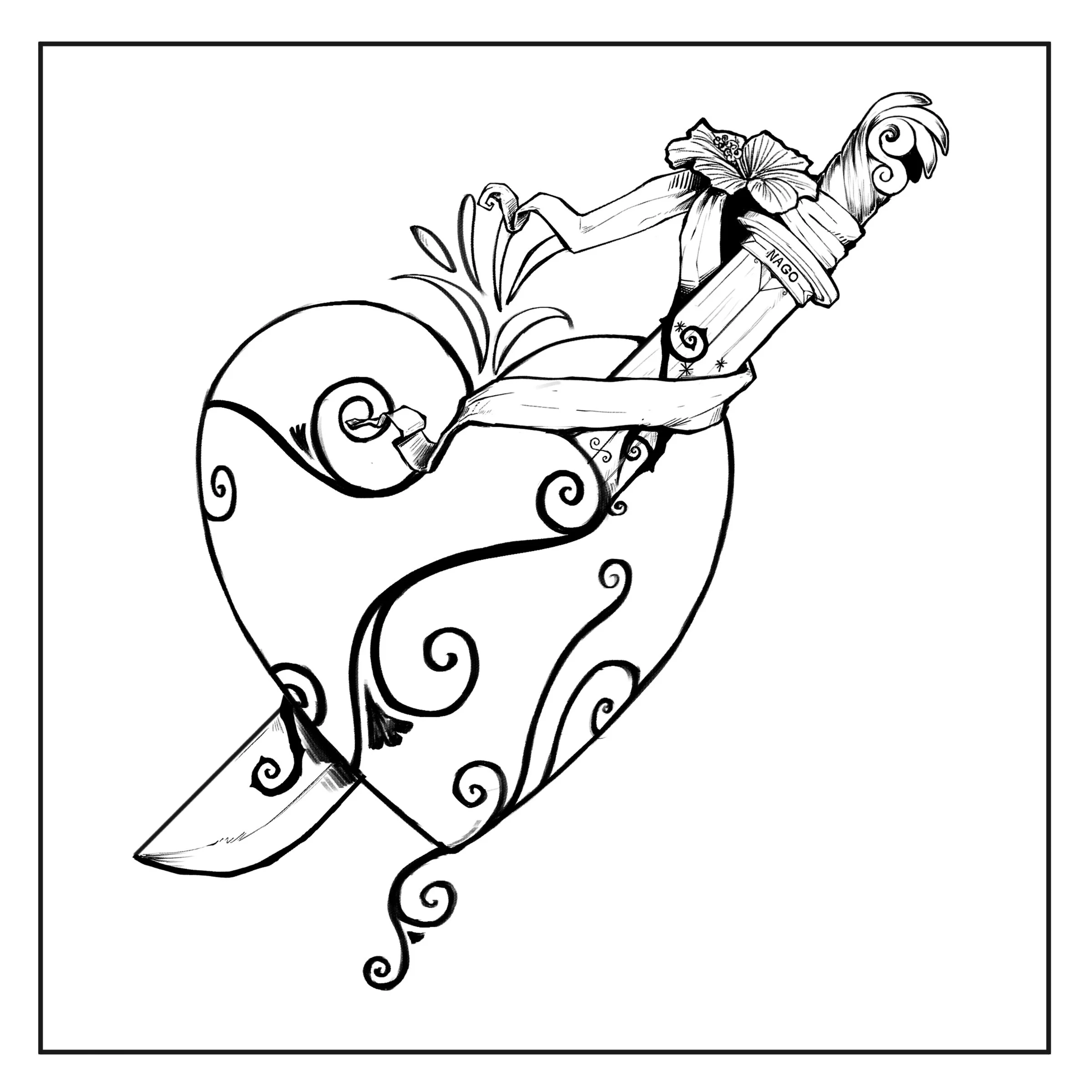
Wedding of Metres Erzulie Freda and Ogou Feray
Featured product
〰️
Featured product 〰️
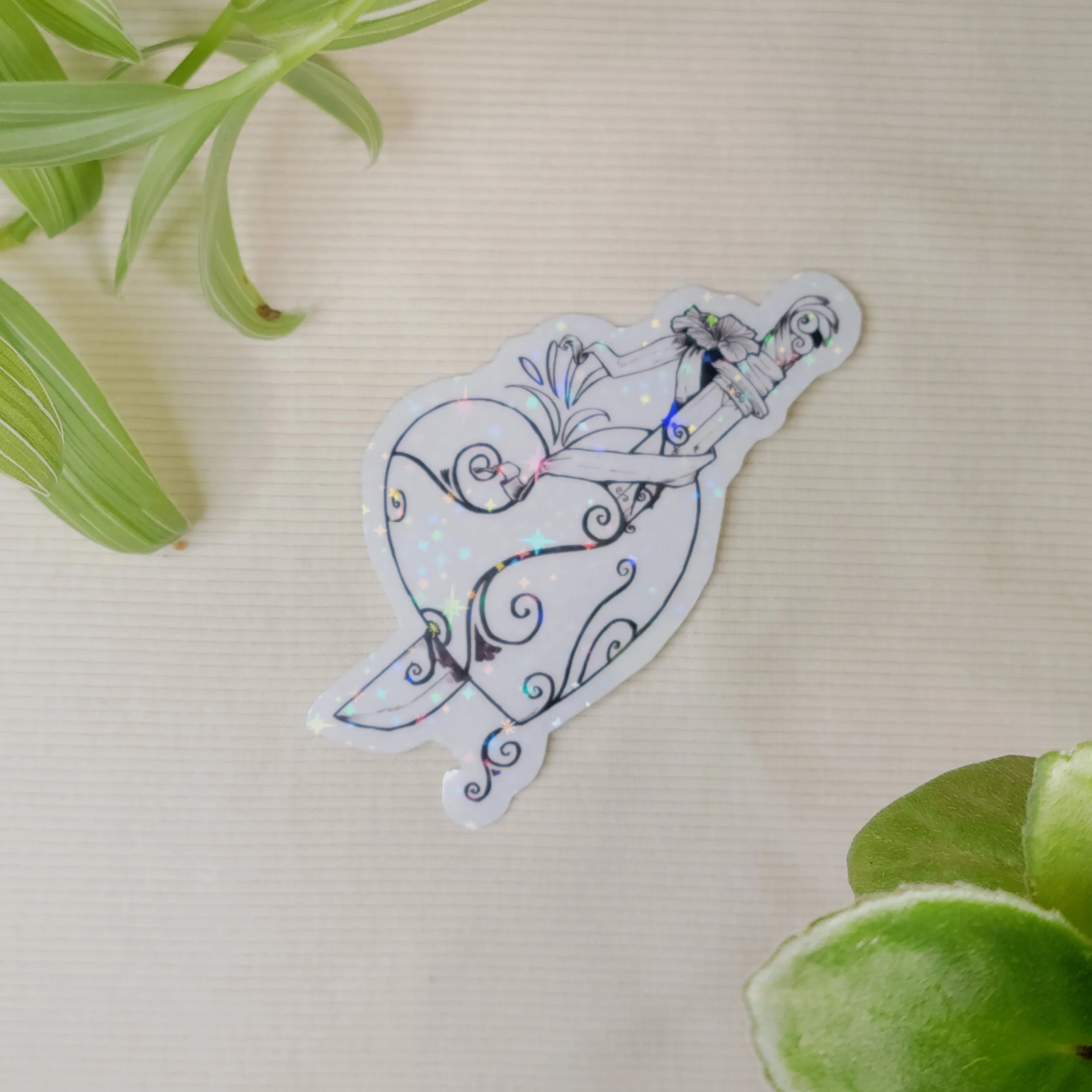
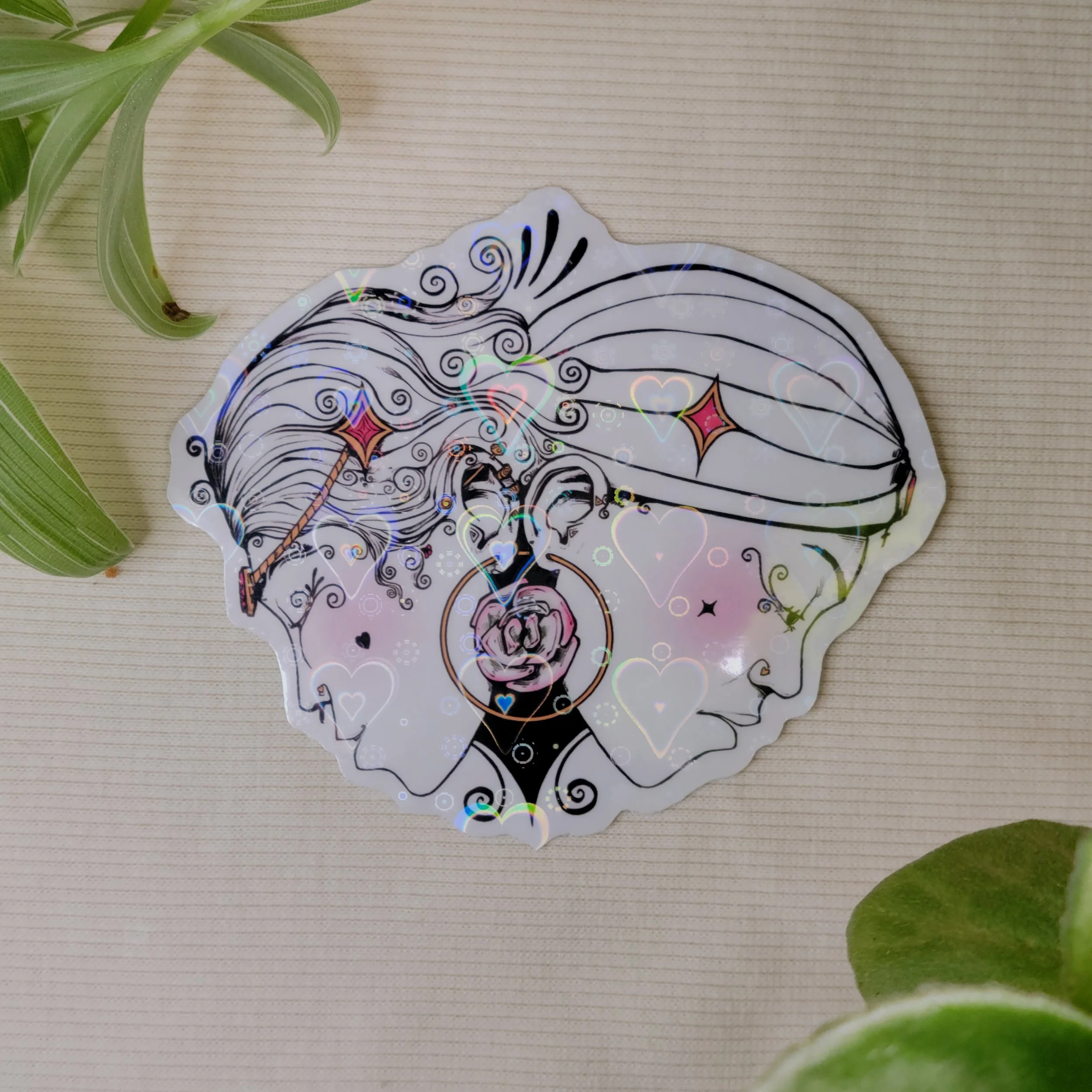
4’’ water resistant sticker
Made with HTVRONT printable glossy vinyl paper
Laminated with Bleidruck self laminating paper
Handcut
Inspired by haitian vodou mythology.
Mistress Erzulie is the wife of Damballah Wèdo and, in this capacity, the co-wife of Aïda-Wèdo. She is said to have left Damballah and then taken up residence with Agwe. In fact, Erzulie has had many lovers in the Vodou pantheon. Her great passion was Ogou Badagri, god of war. Her daughter Ursule is said to be the fruit of that love, whose resemblance to her father is striking, according to Vodou practitioners
4’’ water resistant sticker
Made with HTVRONT printable glossy vinyl paper
Laminated with Bleidruck self laminating paper
Handcut
Inspired by haitian vodou mythology.
Yet Erzulie is not only silk, perfume, mirrors, and tears. Beneath Freda’s softness pulses another current—darker, fiercer, and far less forgiving. Where Freda longs, Dantor burns. Where Freda dreams, Dantor defends. If Freda embodies love’s vulnerability, Erzulie Dantor manifests its rage, its boundaries, and its unyielding demand for justice. In the next post, we turn toward this other face of Erzulie: the scarred mother, the warrior protector, the spirit of revolution, survival, and uncompromising truth.
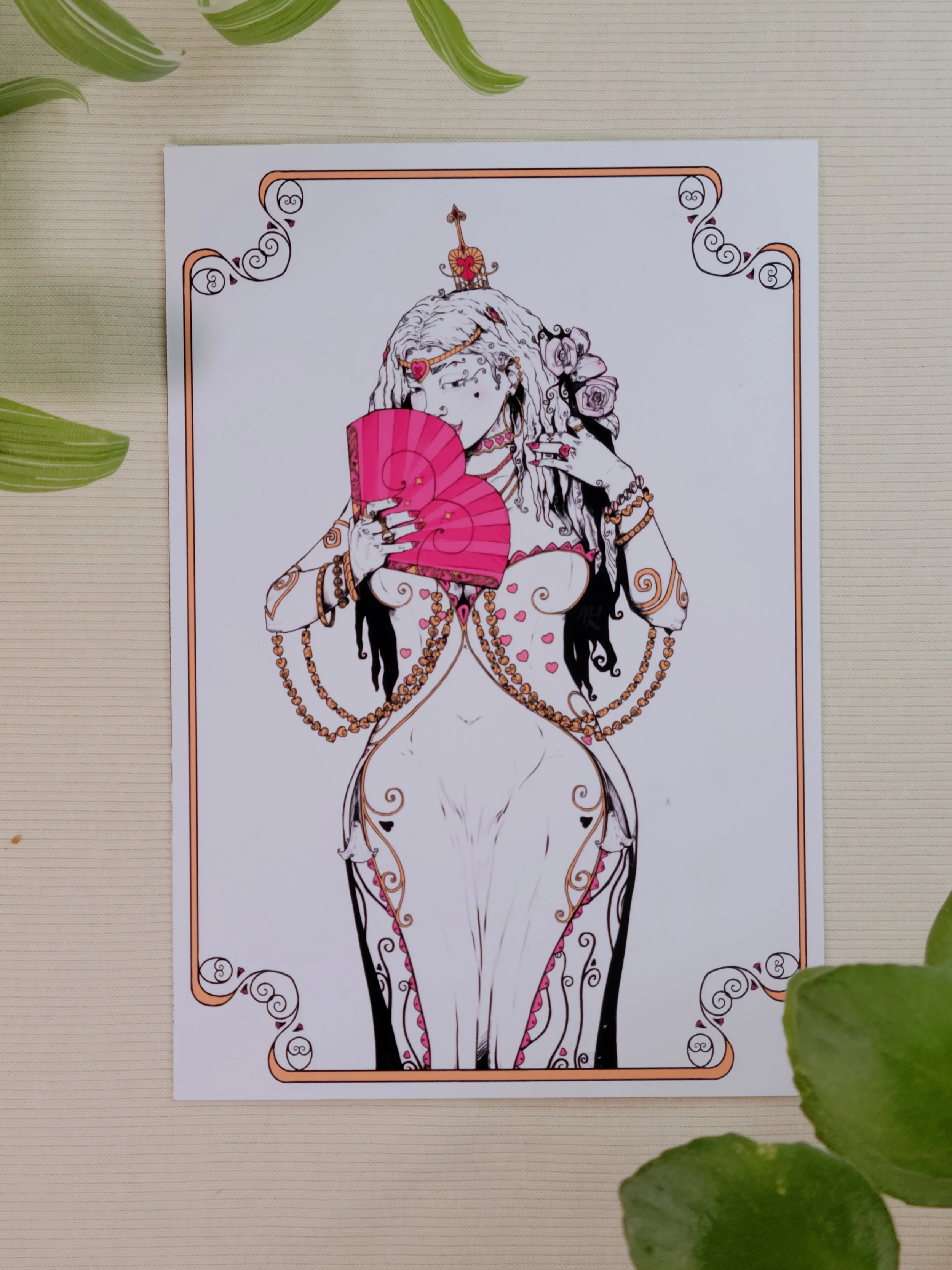
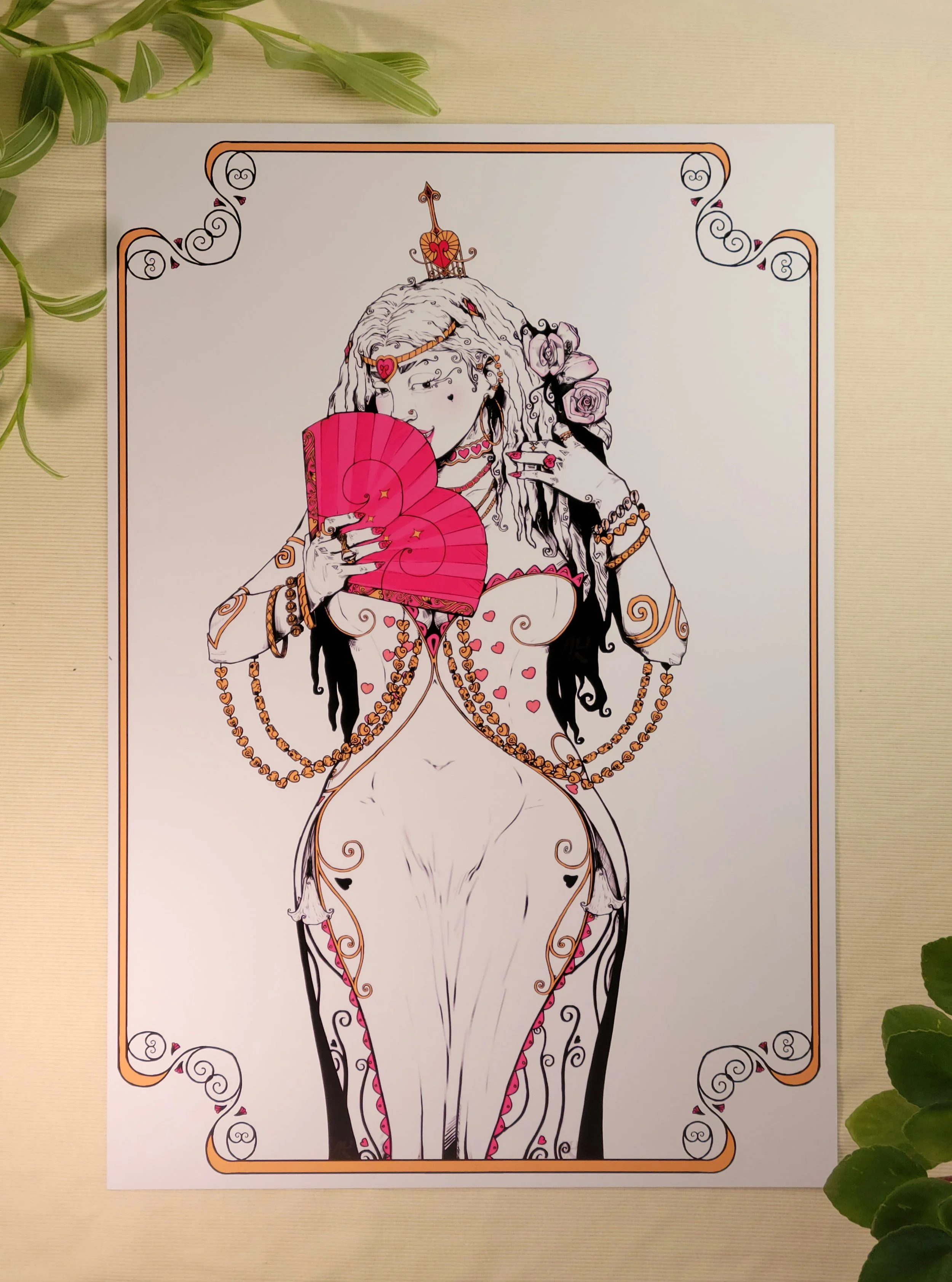
5 × 7 - 13 × 19 print
Printed on Staples Matte Ultra premium photo paper
61lb 230 g/m2
hand trimmed to size expect some imperfection
Inspired by Haitian Vodou mythology
signed and dated by artist
limited quantity available
That day, the goddess wore a pink dress dotted with hearts embroidered in gold thread. Her delicate chest rose with voluptuous breathing. Her left fingers were fitted with three rings. A sweet scent, a mixture of basil and Florida water, perfumed the air. She looked at herself in a mirror held in her left hand, and in her right hand a heart-shaped fan, her veve.
