
Haitian Day of the Dead / Fèt Gede
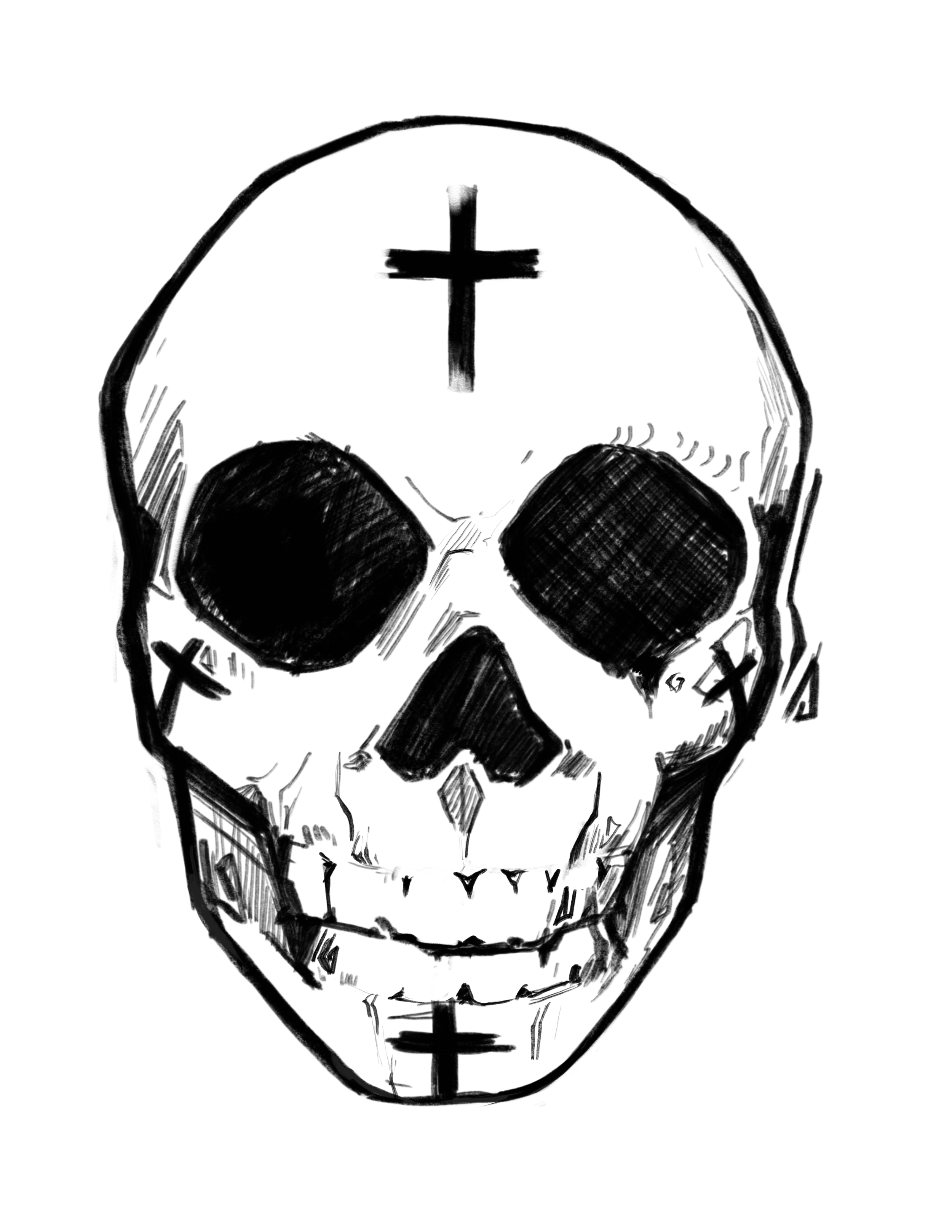
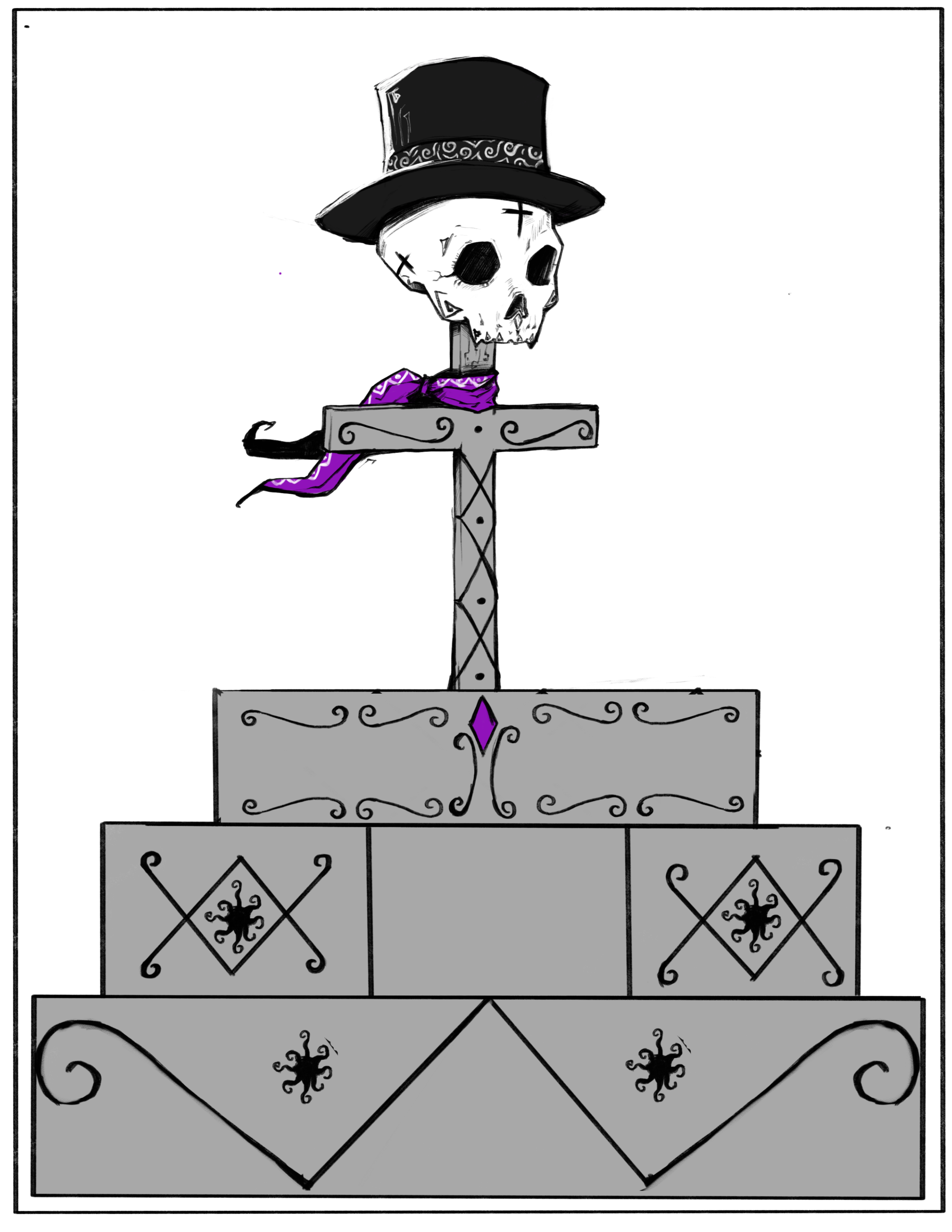
skull with cross
Hi, today is a very important date in my culture, so I wanted to take the day to talk a little bit about it. I'll mostly focus on the spirits that are celebrated during November in Haiti, the Gede, and the symbolism associated with the day, or rather, the month of the dead in Haiti.
November is a very important month in many Afro/Latin cultures around the world, not just Haiti. The 1st and 2nd of November, known as the Day of the Dead, are celebrated in places such as Mexico, Brazil, Costa Rica, Peru... Haitians know it as “Fèt Gede.” In Haiti, the entire month of November is reserved for the Gede and Bawon. This celebration honors the spirits of the dead, known as Gede, associated with death, resurrection, and fertility in Haitian Vodou mythology.
How Haitians celebrate Fèt Gede
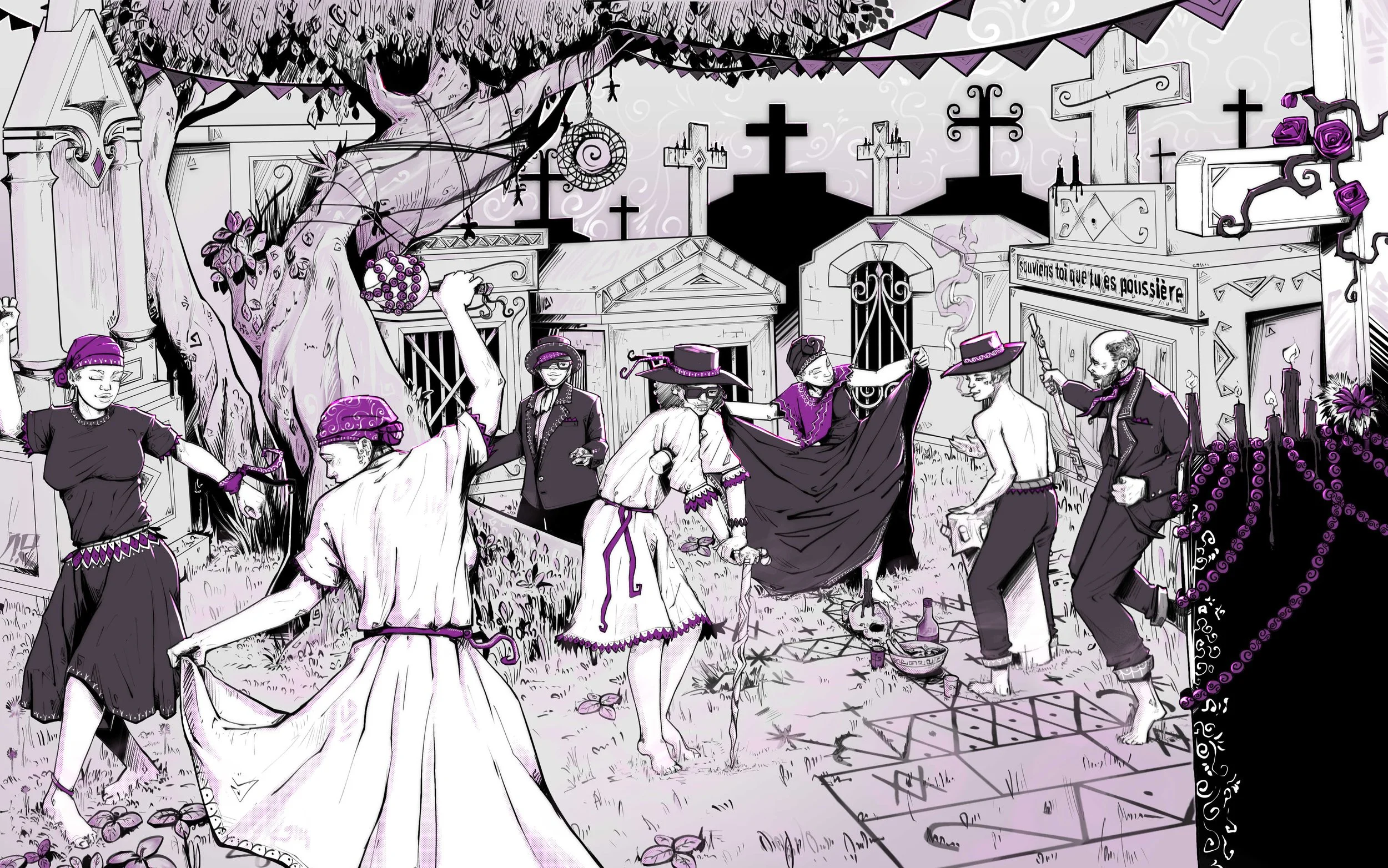
people dancing in cemetary
On November 1st and 2nd in Haiti, streets are filled with music, drums, and people dancing to celebrate another year of life. People also go to cemeteries to clean, offer food, sing, and dance.
Vodou practitioners, dressed in purple, black, and white, often hold a community gathering that consists of a large procession through the city for Gede and for all the dead. These processions are attended by houngan, manbo, hounsi kanzo, and ''sèvitè'' lwa from all the local peristyl (Vodou temples), and usually end in the cemetery with a ceremony.
It also is a day to give back, so many people cook large meals to share and give freely to others.
Most Vodou practitioners, to set a place for their ancestors, lay out a white cloth (the color of the ancestors) and place new candles. They also set a bowl of water with mint and basil on it. They make their family’s favorite foods.
Who are the Gede?
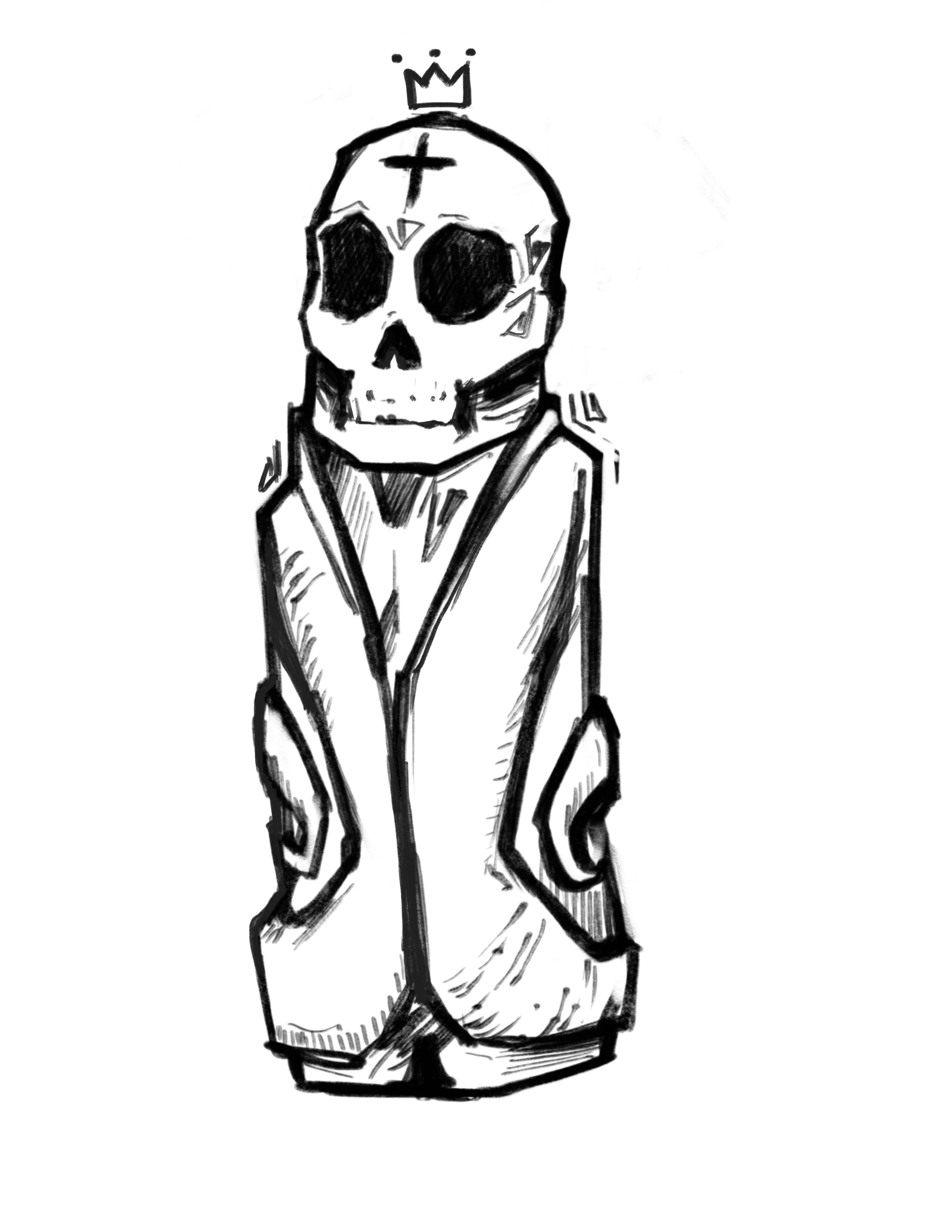
Gede are phallic lwas by nature
Gede (or Ghede/Guede) is the family of spirits, or lwas of the elevated dead in Haitian Vodou mythology. Often referred to as “he,” there are female Gede, trans Gede, and Gede who are children. The Gede are led by Bawon Samdi — more on him later.
The Gede are thought to have descended from the Gede-vi people of Central Africa.
The Gede belong to the family of the unremembered or unclaimed Haitian lwas.
They are known to be a group of loud, funny, irreverent, and sexual lwas; all Gedes act out – after all, they are dead, so what can you do to them?
They transport the souls of the dead, and as spirits of death, the Gede are the keepers of the cemetery and the guardian of ansestral heritage. Anyone seeking ancestral counsel must first address the Gede.
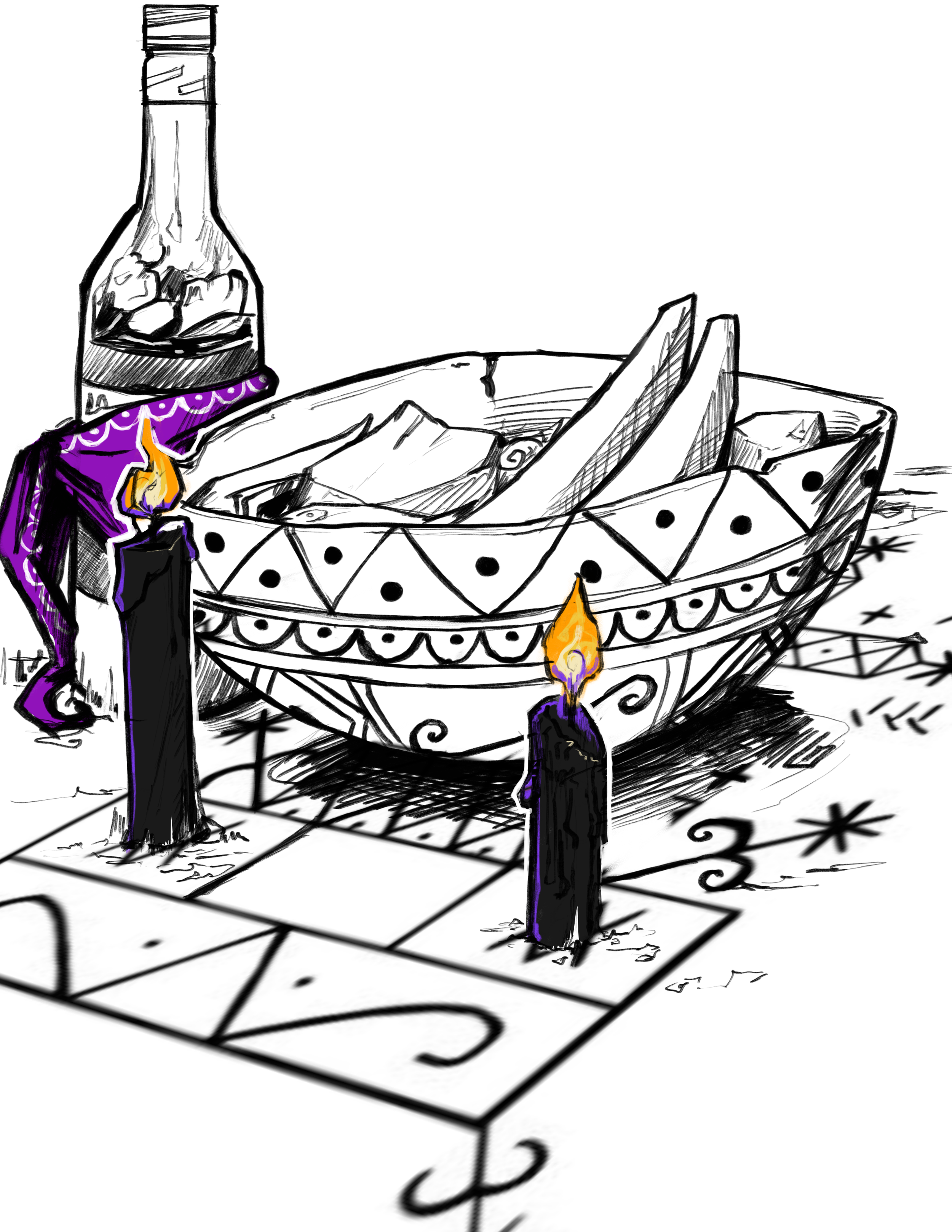
offering to gede
Standing at the crossroads of life and death, they are also special protectors of children and babies.
Their colors are black, purple, and white.
Like all other Haitian lwas, the Gede have their favorite foods, drinks, and offerings
They enjoy potatoes, yams, plantains, cassava, corn, grilled peanuts, salted herring, and black chicken.
There are many special drinks for Gede, but many Gede enjoy piman, a kleren or white rum-based drink with 21 of the hottest known spices, and coffee — two cups, please; one with sugar and one without. While drinking or smoking, they’ll dance. Banda, yanvalou, and maskawon are some of the more well-known Gede dances, complete with hip rolls and thrusts
The Gede escort is formed of 7 main lwas:
Baron Lacroix
Baron Kriminel
Gede Nibo (my favorite lwa)
Gede Loray
Brav Gede
Gede Zarenyen
symbol of Gede
At their head is Bawon Samdi, the eternal figure in black posted at the timeless crossroads at which all men, even the sun, must arrive.
In Haitian mythology, Bawon Samdi, often called The Black Sun, is the master of the abyss in which the sun descends.
The cross upon the tomb is his symbol.
In every cemetery, he’s represented by the first man who died or was buried there. He’s often portrayed as a half-skull-faced man, wearing sunglasses missing a lens, sporting a tuxedo with a top hat, and carrying his “21 peppers” mixture around that only he can drink from.
When asked why his sunglasses have only one lens, depending on his mood, he’ll either say it’s because he needs to keep an eye out for his food or because he can see the world of the dead with one eye and the world of the living with the other. Since the world of the living is so bright, he keeps one lens covered to avoid being blinded.
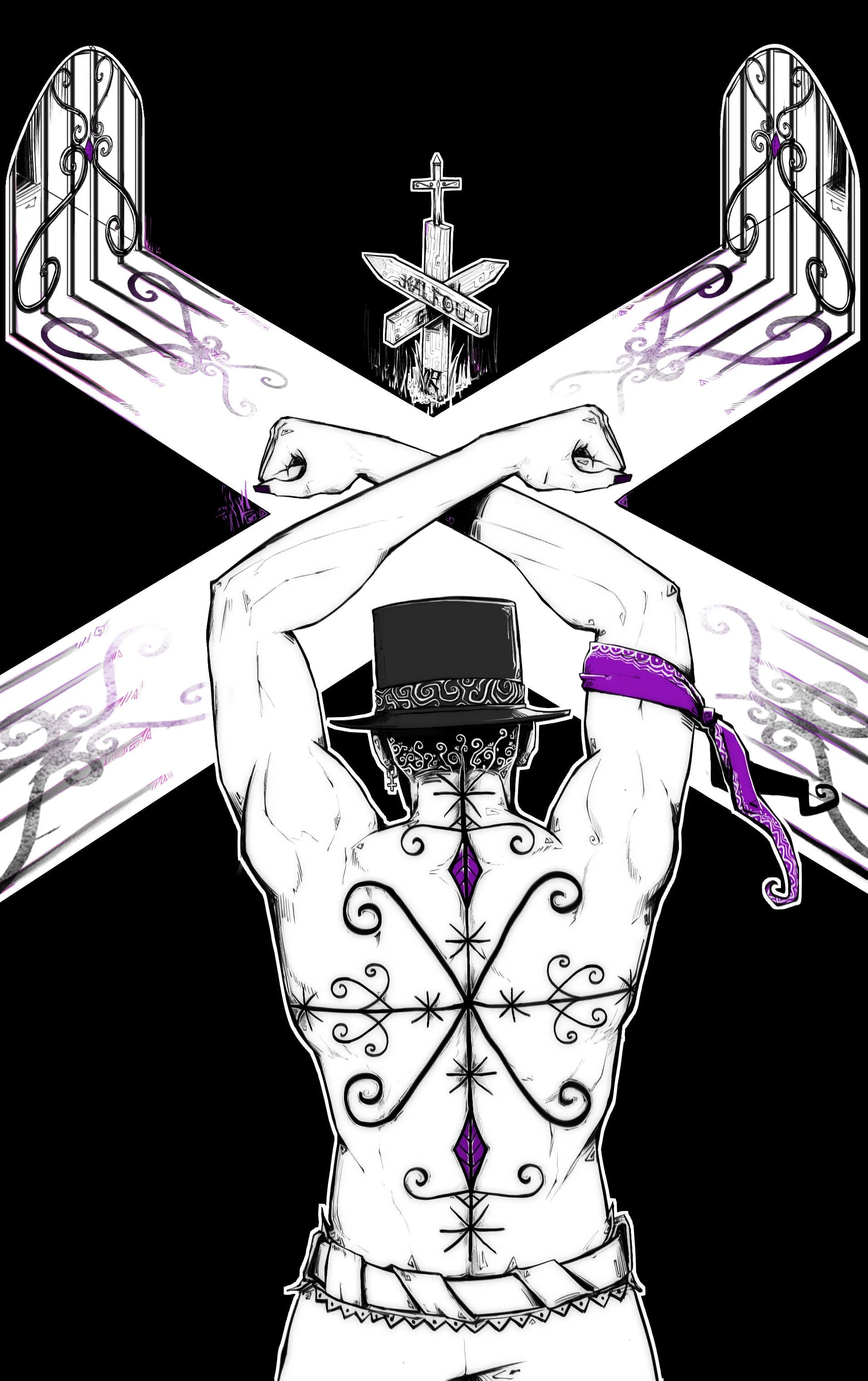
Met Kalfou
Another really important figure in the Gede family is Met Kafou, also known as Gede Mercure or Kalfou. His name translates to “The Crossroads Master.”
Met Kalfou has dominion over all roads, streets, and crossroads, both literal and spiritual.
He’s the master of the points between doors.
He’s often portrayed as the opposite version of Papa Legba (I will write a piece on him later).
Some say he’s the younger aspect of Papa Legba.
Leaving you with the spirit of Fèt Gede
Fèt Gede might sound scary, but when we take a deeper look at the celebrations, the meaning of the gestures, and the powerful mythical figures behind it, empowering every Haitian throughout the world, we see it for what it is — a vibrant message of love, community, resilience, and continuity— a celebration of life in the remembrance of death.
So this November, celebrate life and every aspect of it. Share a meal with your neighbor, dance to some music, prepare your favorite food, and enjoy it deeply, like a member of the Gede family would. EWA!
Song Dedicated to Brav Gede
[ Mwen di Brav O
rele Brav O Gason temerè bout bannann li temerè
moso poul li temerè youn kout kleren li temerè
m'ap rele Brav Guédé Vini sove zanfan yo laro !
Brav O rele Brav
Brav gason temerè ]
[I say Brav O
Call to Brav O the reckless boy His piece of plantain is reckless
his piece of chicken is reckless his clairin shot is reckless
I'm calling Brav Guédé come save the children Up there
Brav O call to Brave
Brav the reckless boy]
If you enjoyed this blog and you’d like to see more of it in the future, please consider sharing it with a friend who might enjoy it too!
👉🏾 Check out my print shop to celebrate Gede in style this November!
Kwa senbo! Kwa la kwa! Kwa deye kwa!!!
