
Legba-The old man at the Gate
First, there was light; the birth of the new world and the birth of the sun are one. In ancient Dahomey, this fire of life, in which divine creative power was first made manifest, was Legba.
Today, in Haiti, the ritual bonfires burn for him.
Who is Legba?
He is the sixth and last offspring of Damballah the Sun and Ayida Wedo, named Oumgan Ican Legba at birth by his mother, surnamed the luminous son.
He uses his hat to protect the whole of creation from his father’s sun.
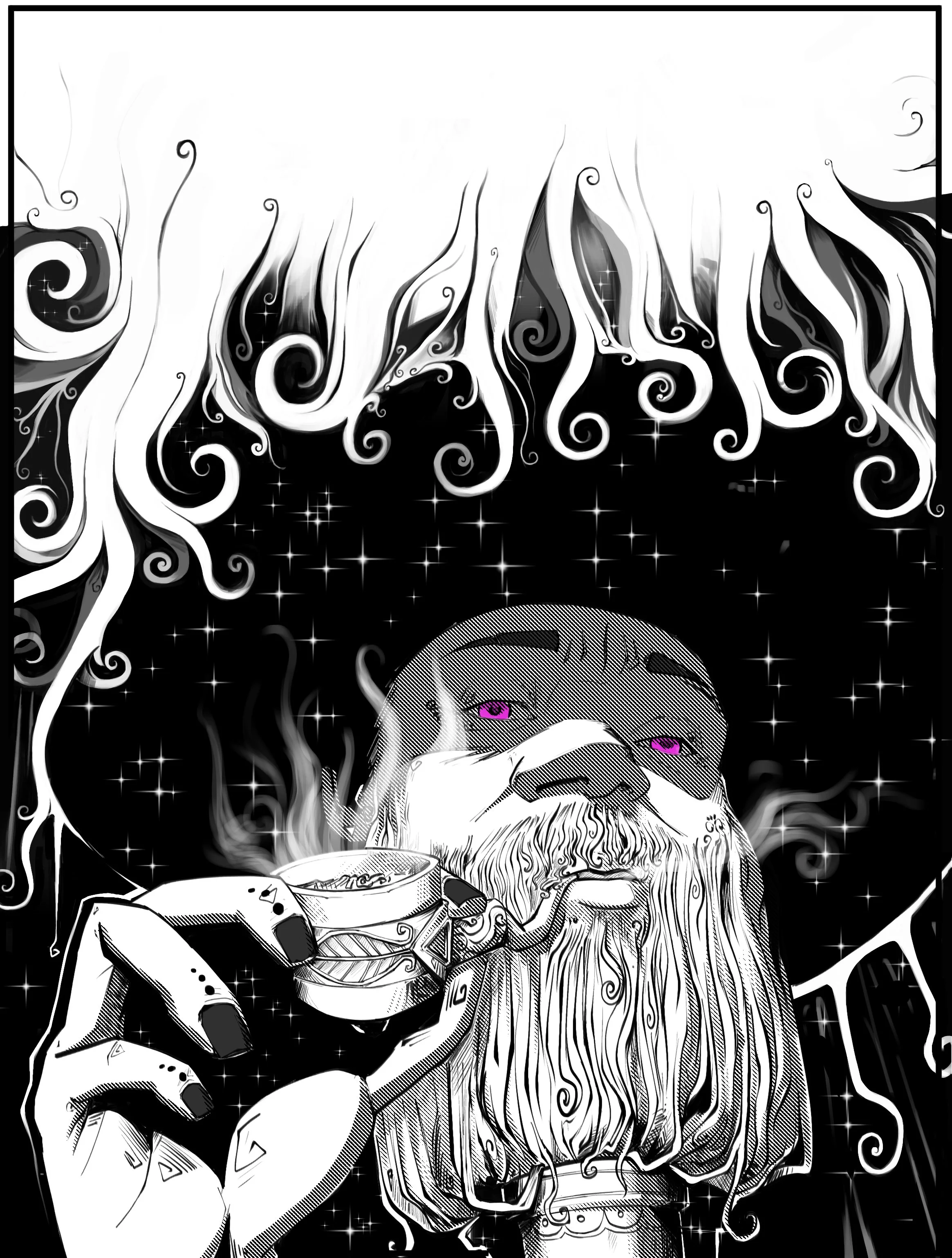
As the principal of life, as the initial procreative whole, Legba was both man and woman, and his veve still bears the sign of this totality.
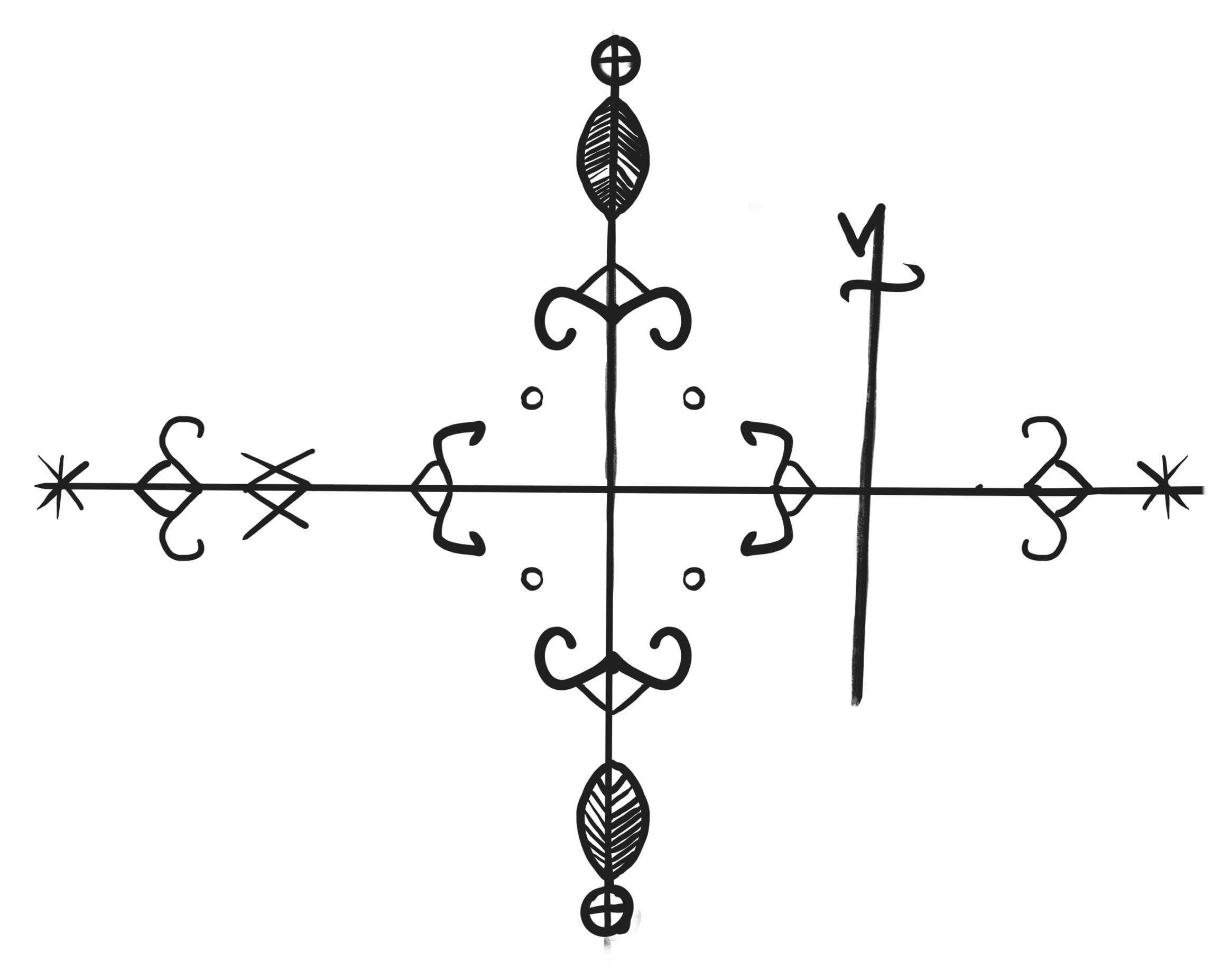
Legba’s Veve
Though originally depicted as a youthful and sexual figure in Dahomey, by the time Legba arrived in Haiti, the knowledge of death had already aged him. In his knowledge of death, he also became the guardian of the path between life and death. His omniscience, which was the result of his central, supreme position —where all could be seen—became the all seeing mediator between the lwas, the living and the dead.
He is often portrayed as an old, weathered peasant who has worked his land all his life. He is commonly seen with a twisted cane, shifting down the road, a small fire in his pipe, and a little food in his macoute (sack).
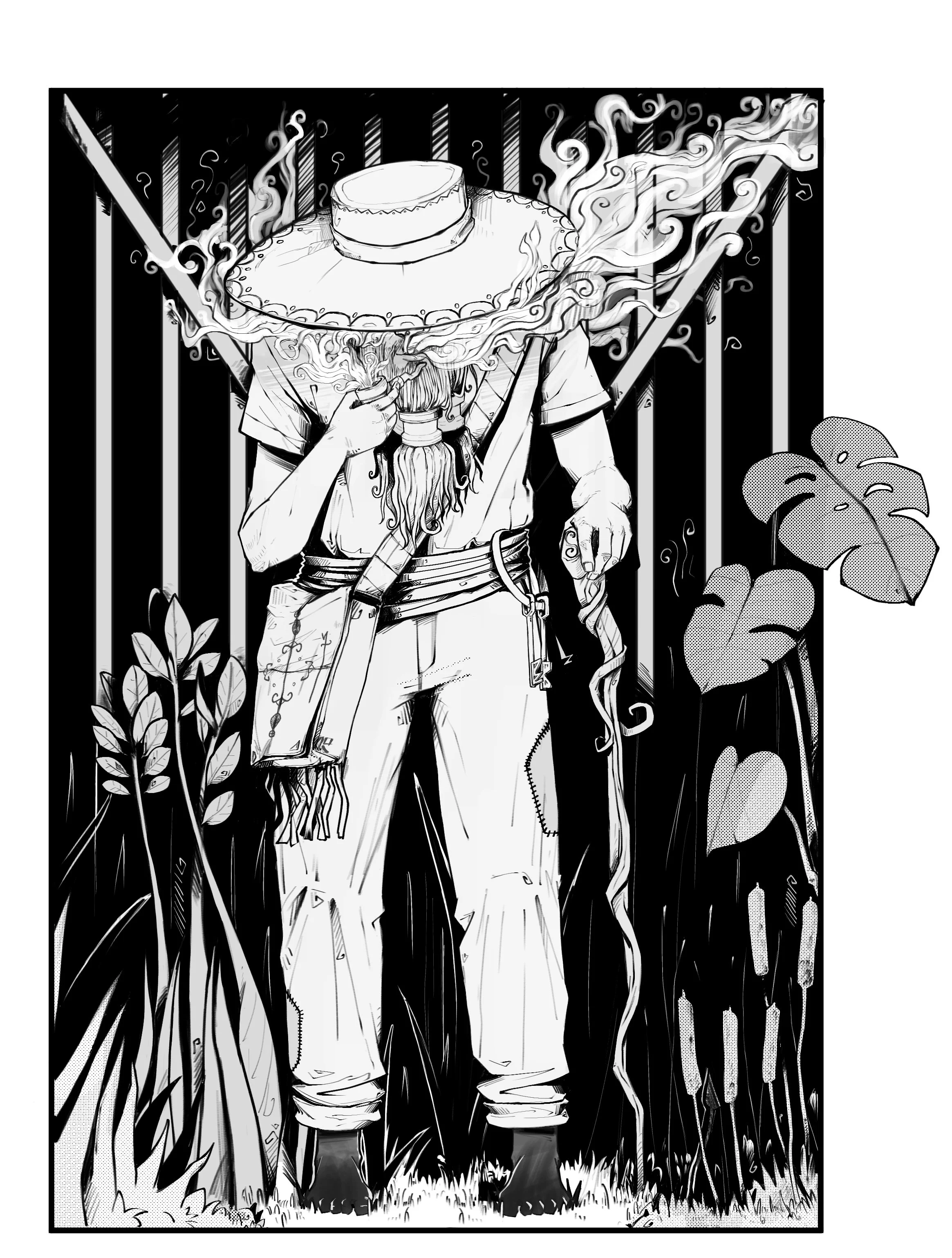
Legba
Legba is the link between the visible, mortal world and the invisible, immortal world. He is the avenue of communication between them.
Without his goodwill, men cannot communicate with gods, and gods cannot communicate with men. He is God of the crossroads, the vertical line of the axis, the guardian of the great road leading from the mortal to the divine realm: the Grand Chemin.
Legba, the Poto Mitan ; the link with Gede:
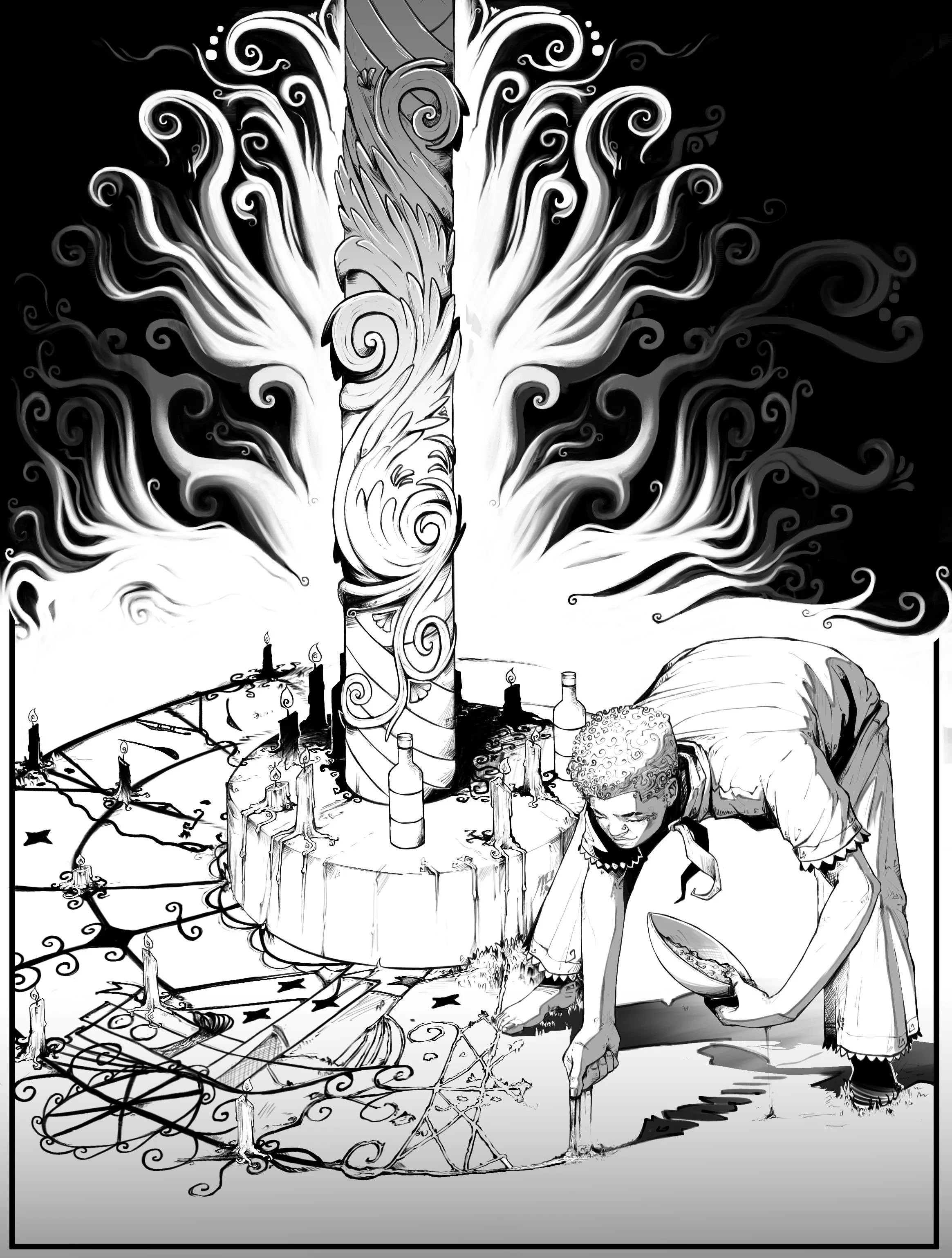
Voodoo practitioner tracing veve symbols around poto mitan with white chalk powder.
The poto-mitan, the center post that supports all peristyles (Vodou temples) and serves as the means through which the loas arrive at the ceremony, is also called Poto-Legba.
The poto-mitan, charged with cosmic vibrations, often has a phallic attribute—a remnant of Legba’s past and a link between him and the Gede.
This phallic symbol that links Legba with the Gede, represents resurrection, fertility, and knowledge. If Legba represents the sun, the beginning of all Vodou ceremonies, Gede Nibo—whom he shares the poto-mitan with—represents the end of the ceremony, the abyss into which the sun descends.
Legba, the Sun-Lord of the crossroads, the meeting point of opposites, is twinned with his own opposite.
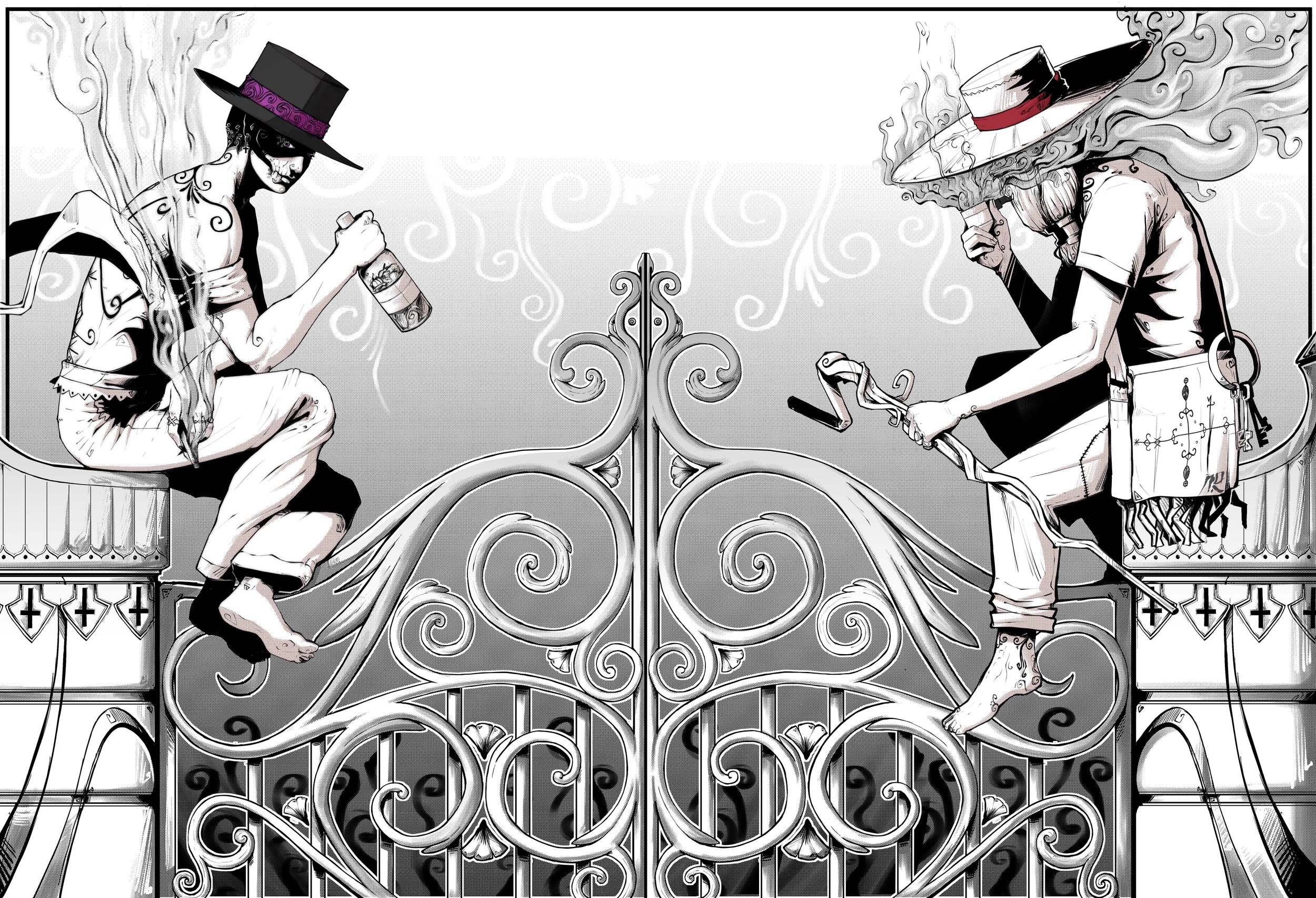
He is linked to Kalfou, whose other hand firmly holds that of the Gede. Across from him, on the same gate, sits the Petro Met Kalfou, and he too commands the traffic through it.
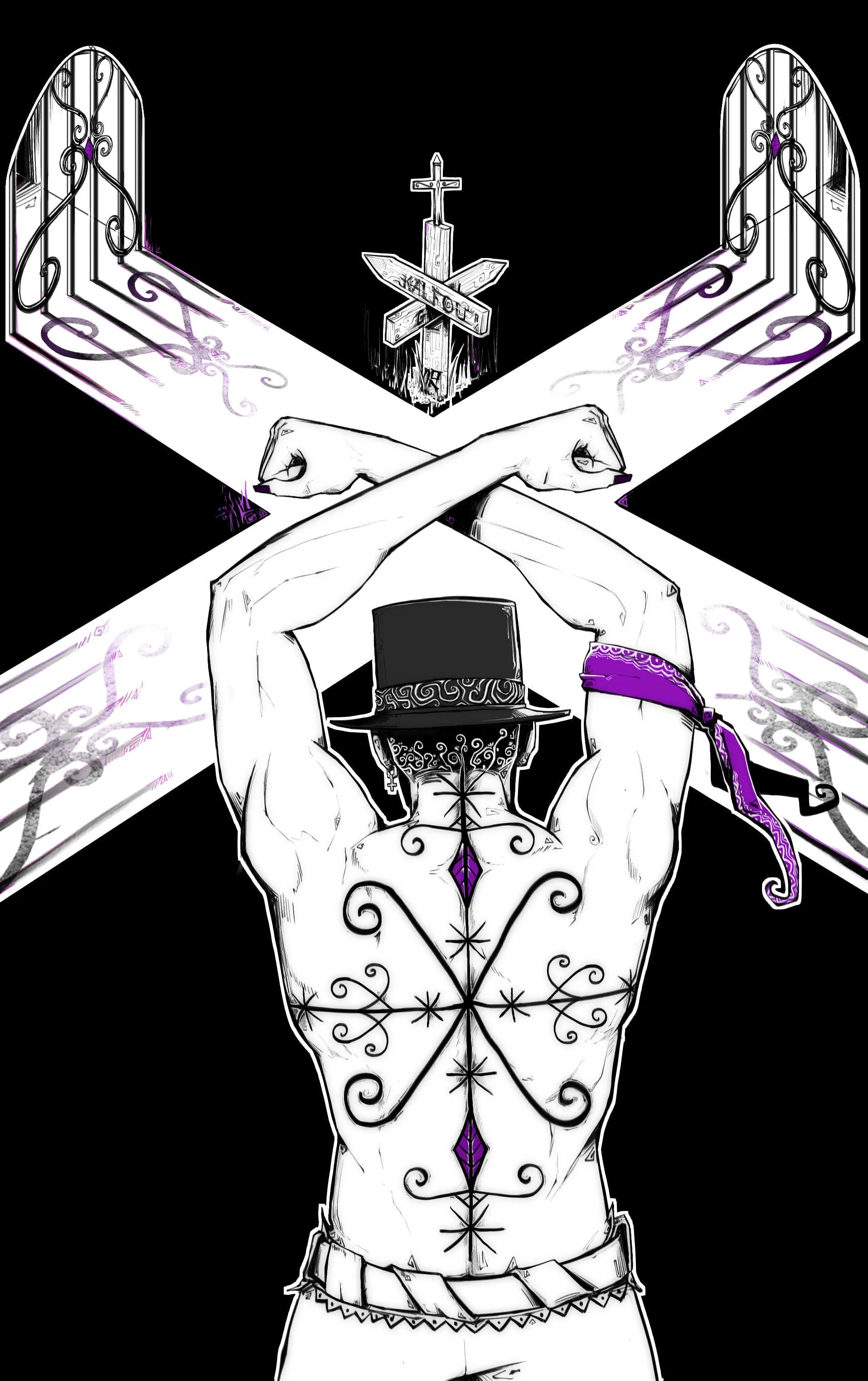
Met Kafou, also known as Gede Mercure or Kalfou.
His name translates to “The Crossroads Master”.
Met Kalfou has dominion over all roads, streets, and crossroads, both literal and spiritual.
He’s the master of the points between doors.
He’s often portrayed as the opposite and younger spirit of Papa Legba.
Legba’s Importance in Haitian Vodou:
All Vodou ceremonies should begin with offerings to Legba.
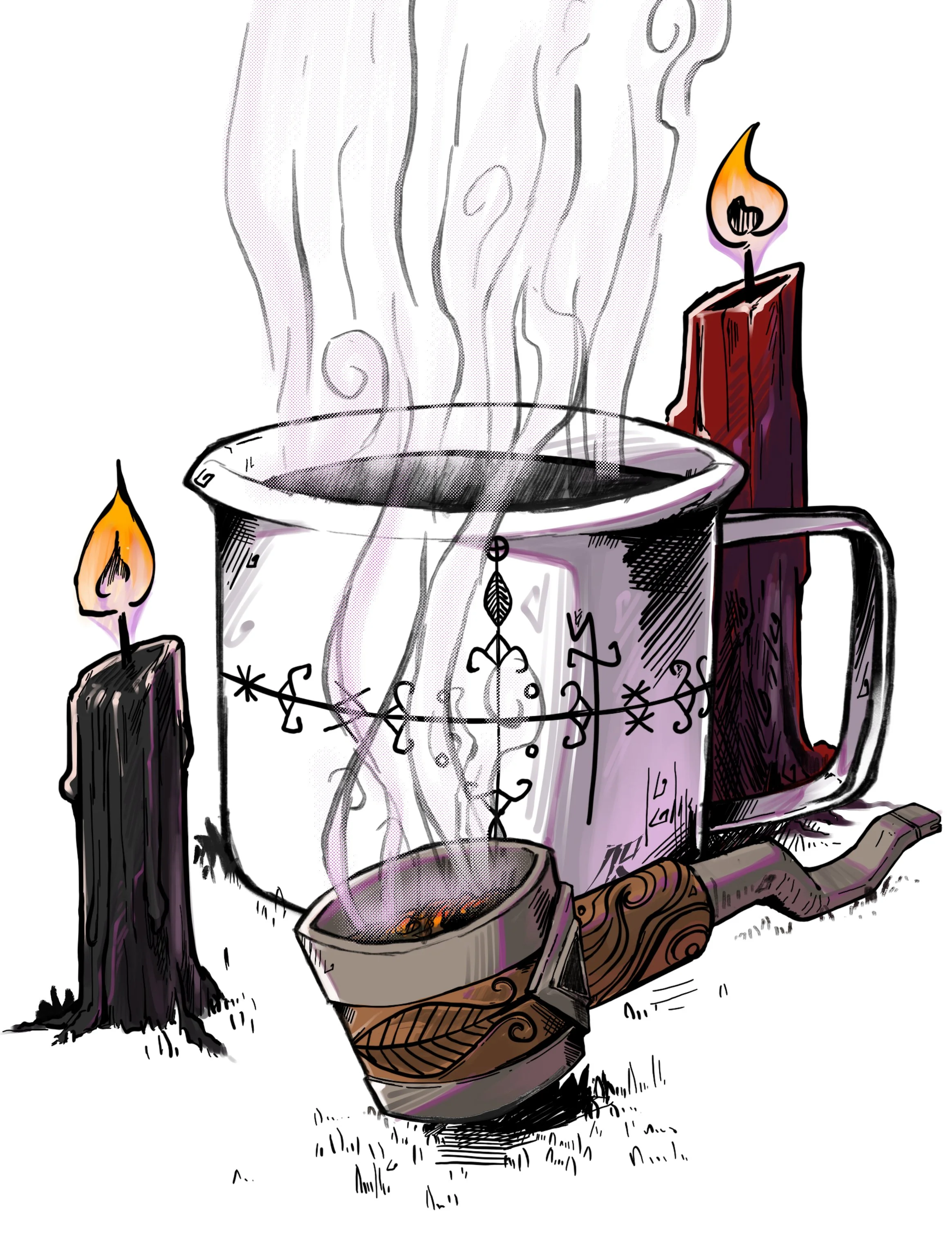
Offerings to legba
Without his blessing, no ritual can begin, and no connection can be made between the visible and the invisible. As the god of the crossroads and guardian of doorways, he holds the keys to the gateways between man and gods.
Legba can speak all languages, making him the universal translator between men and gods. His omnipotence allows him to see everything—both above and below—across all planes of existence. This makes him a powerful protector and guide, capable of directing souls along the path of life and death.
Legba’s colors are red and black, representing the balance of creation and destruction. His day of the week is Monday. Haitians honor him through symbolic offerings such as coffee, rum, cigars, keys, and canes. The yanvalou is danced for both him and the Gede.
Vodou practitioners can invoke Legba with prayers such as:
Par le pouvoir de Maître Grand Chemin, Legba Atibon.
Legba Zanklian.
Legba Kay.
Legba Fleuronde.
Legba Zocolocosso.
Vie Vie Legba.
By the power of the Master of the Great Road, Legba Atibon.
Legba Zanklian.
Legba Kay.
Legba Fleuronde.
Legba Zocolocosso.
Ancient, Ancient Legba.
And usually followed by a song:
Atibon Legba, signole candiole, O Legba ee.
Atibon Legba, signole candiole, O Legba ee.
Dantor mina haut… en haut, si haut,
Kreyol sonde miwa, O Legba e.
Kreyol sonde miwa, O Legba e.
Aizan vie vie Legba.
Atibon Legba, signole candiole, O Legba eh.
Atibon Legba, signole candiole, O Legba eh.
Dantor looks above… above, so high.
Creole looks into the mirror, O Legba eh.
Creole looks into the mirror, O Legba eh.
Aizan, ancient ancient Legba.
Alegba Alegba,
Sa ou pote pou mwen,
Panyen sou tèt,
Ralfo nan do, ooo,
Sa ou pote pou mwen.
Alegba, Alegba,
What have you brought for me?
Basket on your head,
Rope across your back, ooo,
What have you brought for me?
—————————————————————
- Click >>HERE<< to shop the Art Featured in This Post!
——————————————————————————
Kwa Senbo! Kwa la kwa! Kwa deye kwa!!
