
Gede Nibo; the intersection of gender, spirit, and rebellion in Haitian Vodou
“I’m not man or woman. I’m the perfect masculine and feminine being all at once.”
Before we get to Gede Nibo, it helps to look back at where the spiritual path truly begins. In my earlier writing on Legba—the old man at the gate—I talked about how every journey in Vodou starts with him. He is the one who opens the passage between worlds. Once that doorway is lifted, we don’t simply walk forward; we step into the territory of the Gede. And standing at the center of that vivid, unruly realm is Gede Nibo/Nimbo. If Legba is the quiet nod that tells you the road is open, Nibo is the voice that greets you inside—bold, disruptive, and unafraid to exist in the spaces most spirits avoid.
Birth of Nibo, The Gede
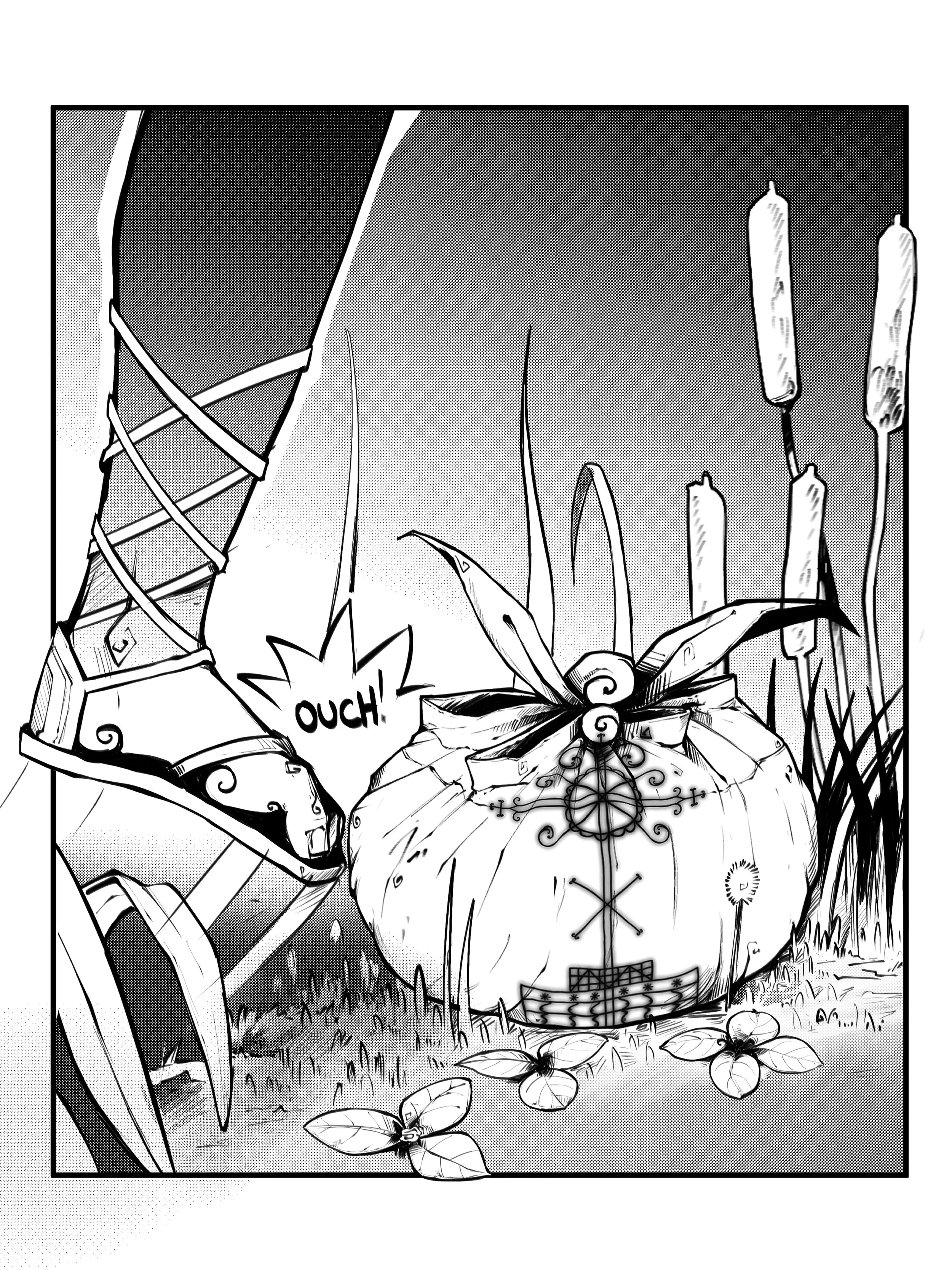
Ogou Badagri’s foot smashing against package
One day, Ogou Badagri, father of the Ogou family, was going to visit his wife, the beautiful Freda. He was in a hurry, walking to get his horse, when all of a sudden he felt his foot smash against something. It was a rock neatly enveloped in a pure white, almost glowing towel. Having a bad feeling about this, he took the package and brought it home.

Ogou Badagri’s altar
He placed it on his pé (altar for the Lwas) and waited. After what must have felt like an eternity for Badagri, the package started to move, and from it came a beautiful young child. Startled and afraid, Badagri ran to get Papa Loco, Hougan supreme and healer, who came hurriedly. Papa Loco baptized and named the child Nibo. Thus, Gede Nibo was born.
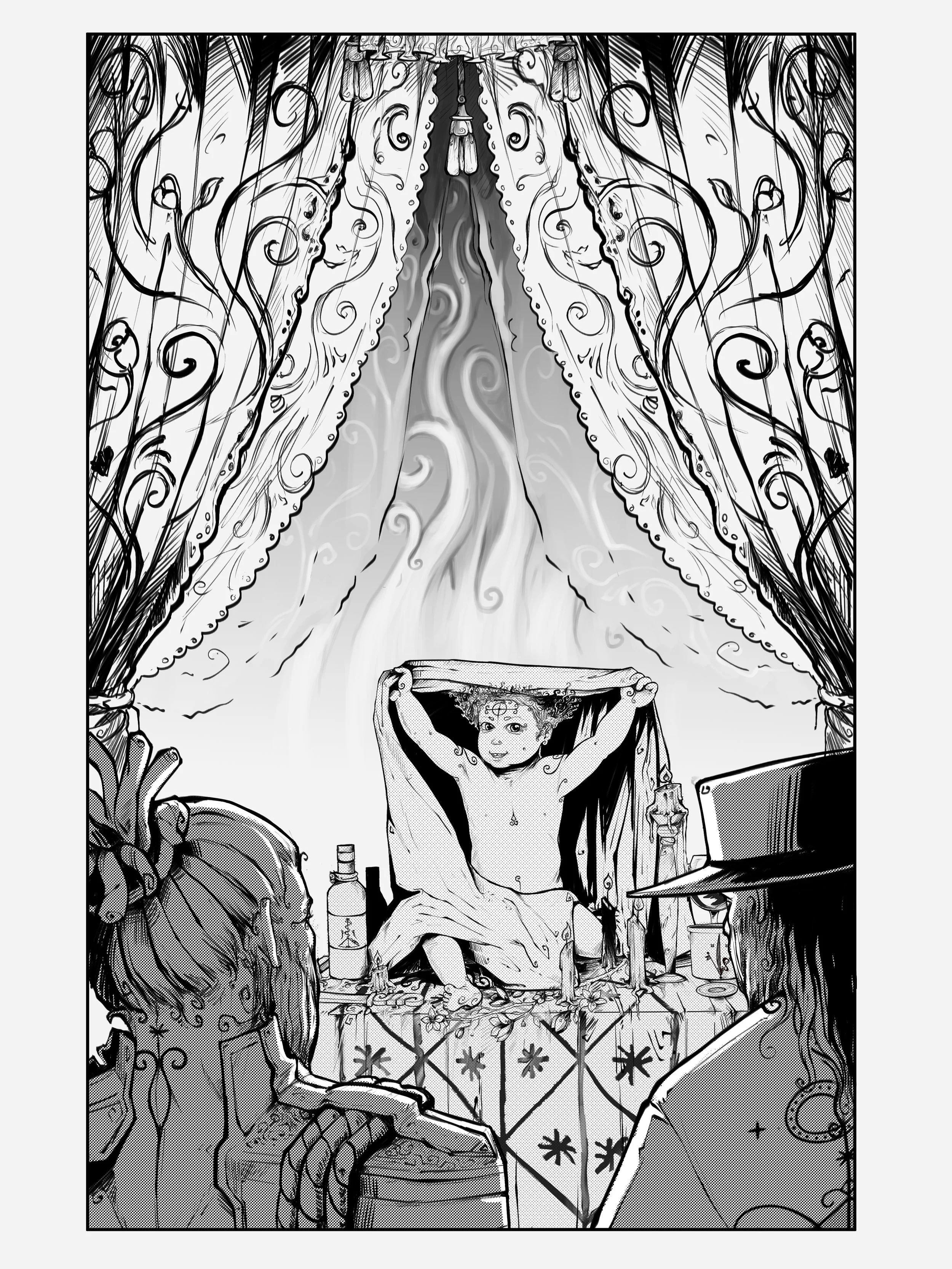
Ogou Badagri and Papa Loco looking at the young Nibo on altar
Badagri, jealous of how much the young Nibo grew to admire and adore his wife Freda, sent him to live in the realm of the Gede. Bawon Samdi and Manman Brigitte adopted him as their own.
Nibo, the Man
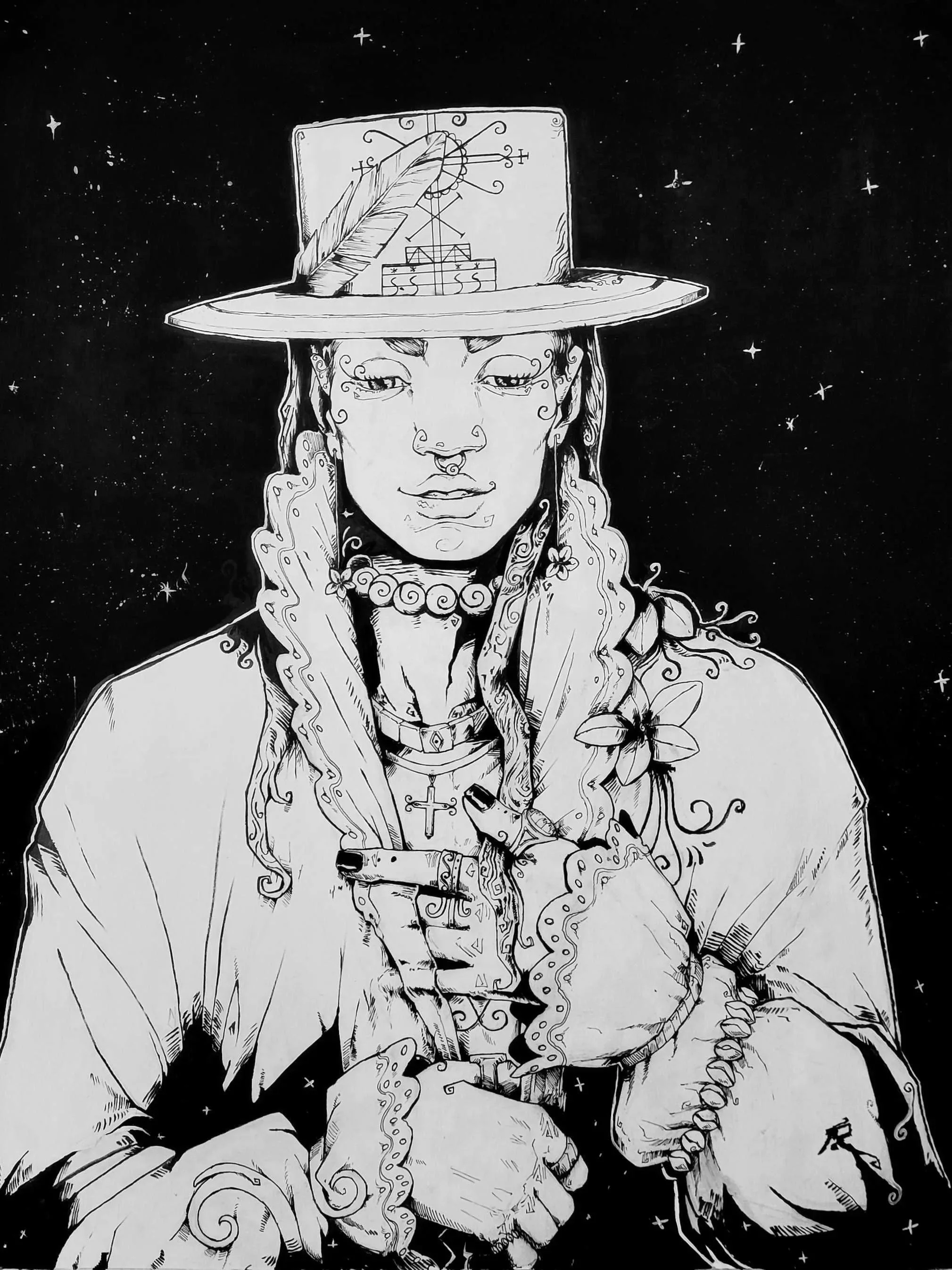
22”X28” mixed media painting of Gede Nibo
The legendary tales of Nibo, an ancient West African prince who is said to have sacrificed his life on a quest. Tales of Nibo, the brave prince, who went to the underworld to find a cure for a fatal epidemic that plagued his people, traveled to Haiti on slave ships. These tales transformed from simple stories into empowering ones—stories of a prince who would one day return to free all children and women from suffering.
Other stories, tell the tales of Nibo, a young man you was killed violently. Because of his own violent death, Nibo has a soft spot for others who suffer a similar fate, and he has a profound sense of justice. A Gede of great mystery, he is powerful and capricious.
Gede Nibo at the Center of the Haitian God's Government System
Nibo is the interior minister of Bawon’s government. He can grant any wish if a devotee prays upon a child’s tomb. He does not need sanction from Bawon to execute certain actions.
If anyone commits the act of taking, without his consent, a cross from a child’s tomb, it would be to their greatest harm.
He is also the general of Bawon’s government law enforcement.
Life and death are the same. However, everything below is above; below is a reflection of above. As you see him as a minister among the dead, in Agwe’s domain he is a sailor. Paradoxical, isn’t it? Some sons of Baron Samedi would like to replace him, and in collusion with that powerful and wicked Gede Loray, they are plotting against him. So, to harmonize events, he is obliged to render service to Agwe. In the sea, the sanitary agents are the fishes; he supervises this operation.
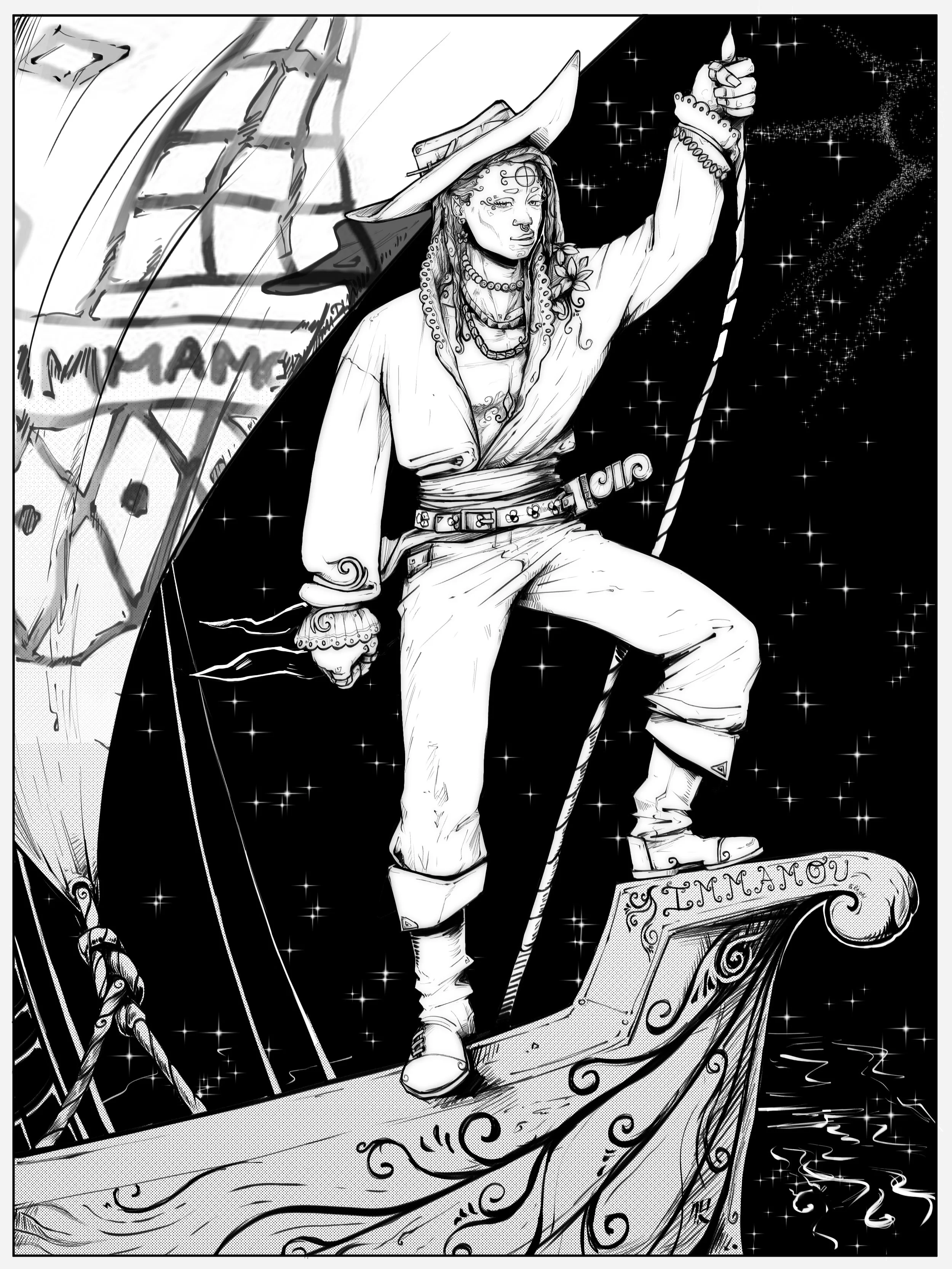
Gede Nibo on Immamou
He renders service to all the Loa. Besides, he gets along with all of them.
His relationship with Legba is a very close one.
In the ceremonies under the peristyle, Legba begins and he finishes.
They share the center post, the phallic symbol that links Legba and the dead. It is Legba, in the form of Gede Mercure, who gave Nibo his gros bon ange(referring to his soul).
Gede Nibo, the Haitian Lwa of Duality
He is the prince of the cemetery, the phallic lord of the dead. Gede Nibo straddles the borders between death and life, sex and death, and between genders as well.
The good regulator, agent of harmony and physical equilibrium.
Nibo may wear mixed feminine and masculine attire. A witty trickster with an eye for a joke, he is simultaneously macho and feminine. Gede Nibo is variously described as pansexual, transgender, and homoerotic.

Nibo is the special patron of those who die young.
Nibo is the special patron of those who die young.
He is the guardian of the graves of those who died prematurely, particularly those whose final resting place is unknown. He is a psychopomp, an intermediary between the living and the dead. He gives voice to the dead spirits that have not been reclaimed from the Lower World. His chwals (possessed devotees) can give voice to the dead whose bodies have not been found.
Gede’s spirit is especially invoked in Haiti to bluntly denounce social biases, while dancing to the sensual and royal Banda rhythm.
Support the work — shop the full Vodou collection
Song dedicated to Gede Nibo:
[Papa Gede Bèl Gason
Gede Nibo bèl gason,
L’abiye tout an nwa.
L’pral monte nan palè!]
[Papa Gede, handsome fellow
Gede Nibo is a handsome fellow,
He is dressed up all in black.
He is going to go up to the palace!]
“Gede Nibo; the intersection of gender, spirit, and rebellion in Vodou.”
If you enjoyed this piece, supporting the art behind it is the simplest way to help.
Browse the store and bring home something that fuels the next chapter.
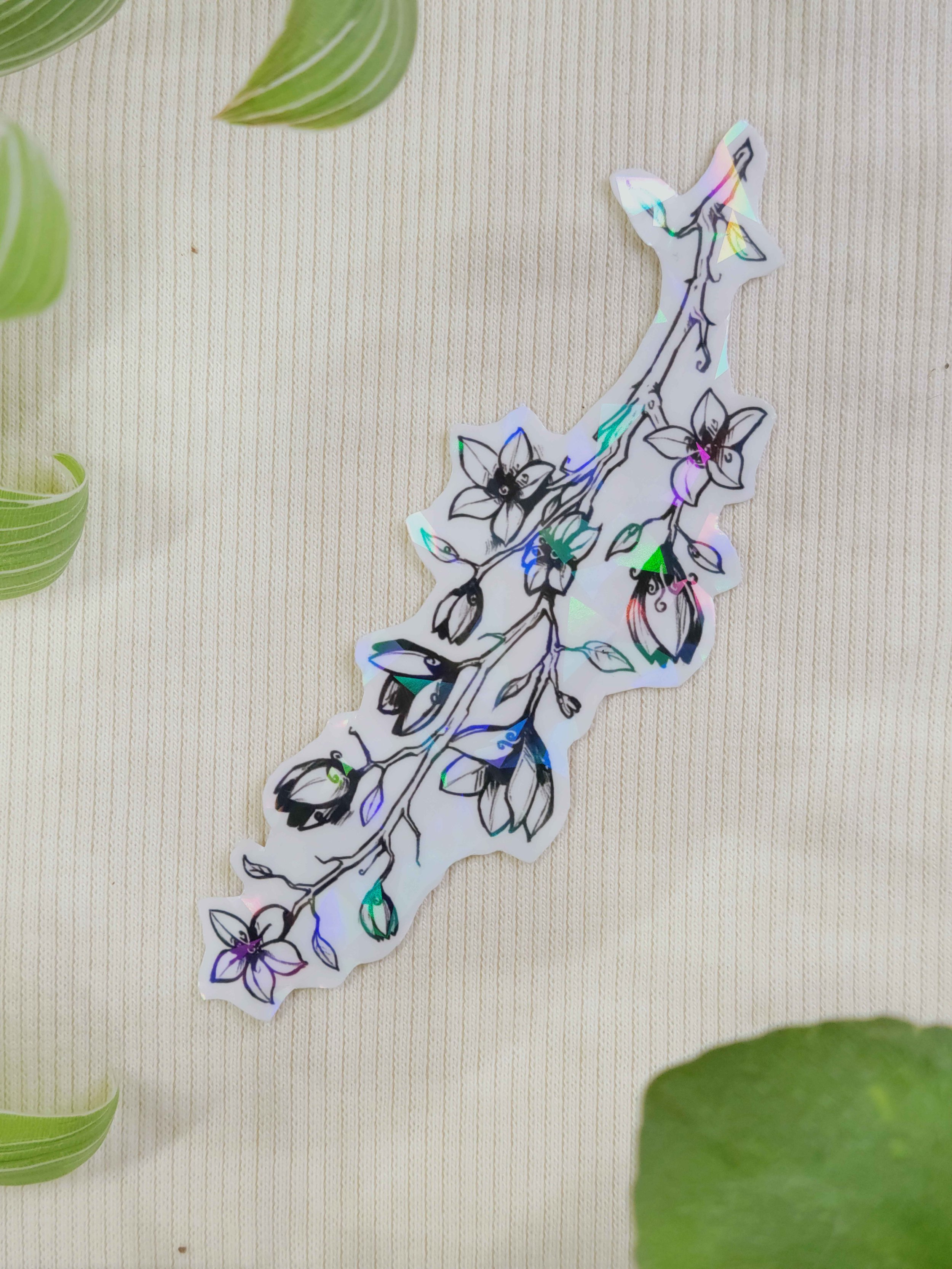
4’’ water resistant sticker
Made with HTVRONT printable glossy vinyl paper
Laminated with Bleidruck self laminating paper
Handcut
Inspired by haitian vodou mythology.
The jasmine flower is a very symbolic floer in Haitian mythology. It’s mostly recalled being seen pinned to nibo’s chest.
Free Shipping for US
〰️
Free Shipping for US 〰️
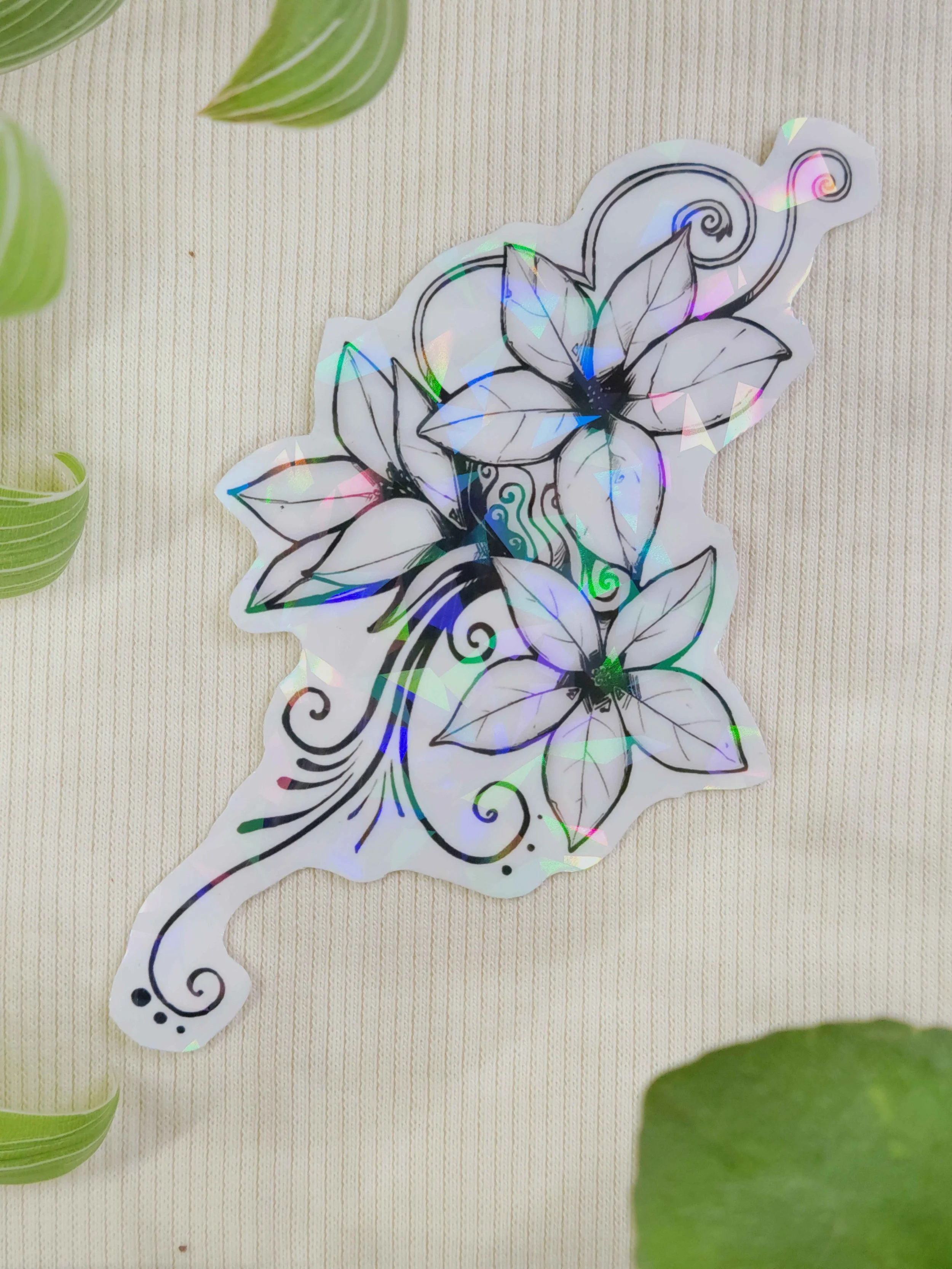
4’’ water resistant sticker
Made with HTVRONT printable glossy vinyl paper
Laminated with Bleidruck self laminating paper
Handcut
Inspired by haitian vodou mythology.
The jasmine flower is a very symbolic floer in Haitian mythology. It’s mostly recalled being seen pinned to nibo’s chest.
→ Own the pieces featured here and directly support this writing.
Kwa Senbo! Kwa la kwa! Kwa deye kwa!!
Gede Nibo,Haitian Vodou spirits,Gede lwa,Haitian Day of the Dead,Vodou mythology,Prince Nibo,Baron Samedi family,Manman Brigitte,Ogou Badagri,Papa Legba,Haitian spiritual traditions,Vodou duality,LGBT Vodou spirits,Haiti folklore stories,Gede symbolism,Haitian cemetery spirit